

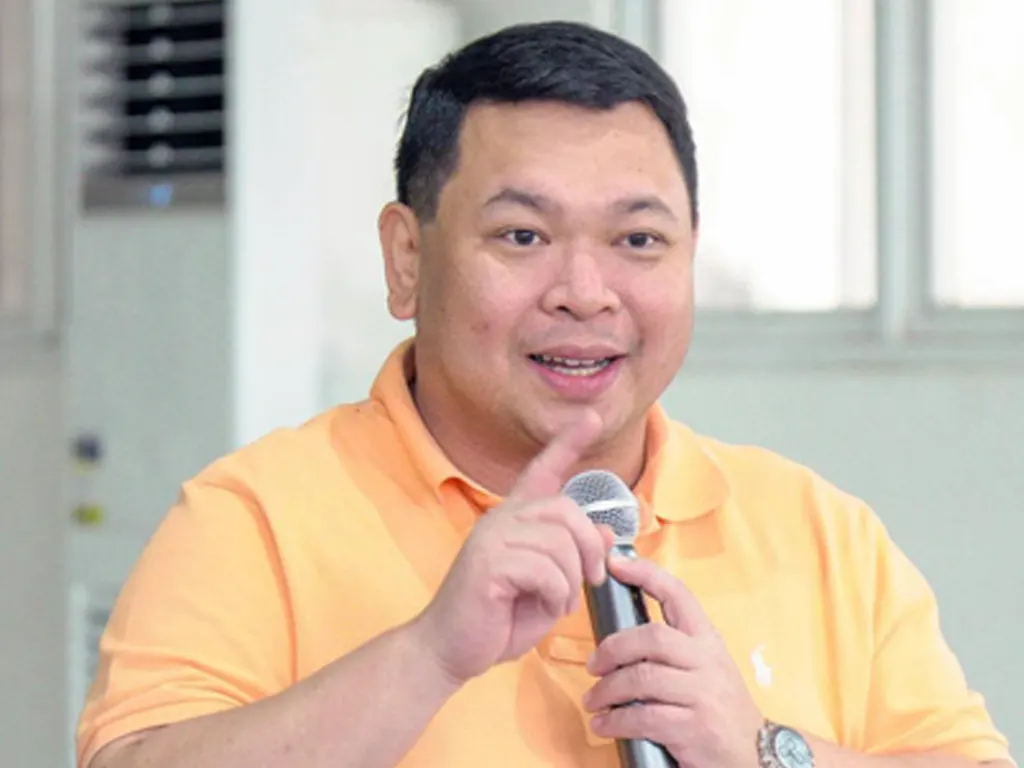
House Committee on Revision of Laws Chairman and Batangas Rep. King Collantes
HOUSE Committee on Revision of Laws Chairman and Batangas Rep. King Collantes in a statement stressed that proposed amendments to the Civil Code allowing married women to retain their maiden surnames seek to address discriminatory practices and inconveniences arising from the misinterpretation or inconsistent application of existing law.
According to Collantes, House Bills (HBs) 1648 and 8630 seek to clarify Article 370 of the Civil Code, which has been interpreted in ways that have led to married women being required to use their husbands’ surnames in official documents and transactions.
“It is the position of the Committee on Revision of Laws that clarifying the ambiguity in Article 370 will help address the discriminatory practices and inconvenience experienced by women due to the misinterpretation or inconsistent application of the said provision by ordinary Filipinos,” said the lawmaker.
“This includes requiring married women to use their husbands’ surnames in accomplishing official forms, as well as refusing to process otherwise valid transactions when married women use their maiden surnames.”
The two bills, authored by Reps. Ysabel Maria Zamora and John Tracy Cagas, and Rep. Cheeno Miguel Almario, respectively, seek to amend Article 370 to expressly provide married women the option to retain their maiden surnames.
The proposed amendment aims to eliminate confusion over the surname a woman may use upon marriage and address difficulties encountered by married women in their everyday transactions.
Collantes emphasized that the committee considers the proposal a measure intended to remove unnecessary barriers faced by married women.
His statement came amid public discussions and reactions on social media concerning HB 1648.
Collantes welcomed the increased public discourse on the proposed legislation, emphasizing the importance of constructive exchanges between lawmakers and the public.
He stressed that meaningful and respectful discussions help ensure that legislative proposals are properly understood and that public concerns are taken into consideration.
Collantes also pointed out that similar measures had been filed in the 18th and 19th Congresses, indicating that the issue has long been under legislative consideration.
The committee expressed optimism that the proposed amendment would finally be enacted into law during the 20th Congress.
The House Committee on Revision of Laws approved HBs 1648 and 8630 on October 5, 2026.
Collantes assured the public that the House of Representatives remains committed to reviewing and updating existing laws in response to the needs and experiences of Filipinos.
“The public may rest assured that the House of Representatives remains steadfast in its mandate to legislate laws and to revisit existing ones when necessary, guided by the people’s feedback, lived experiences, and evolving needs.”
metrosundaily