

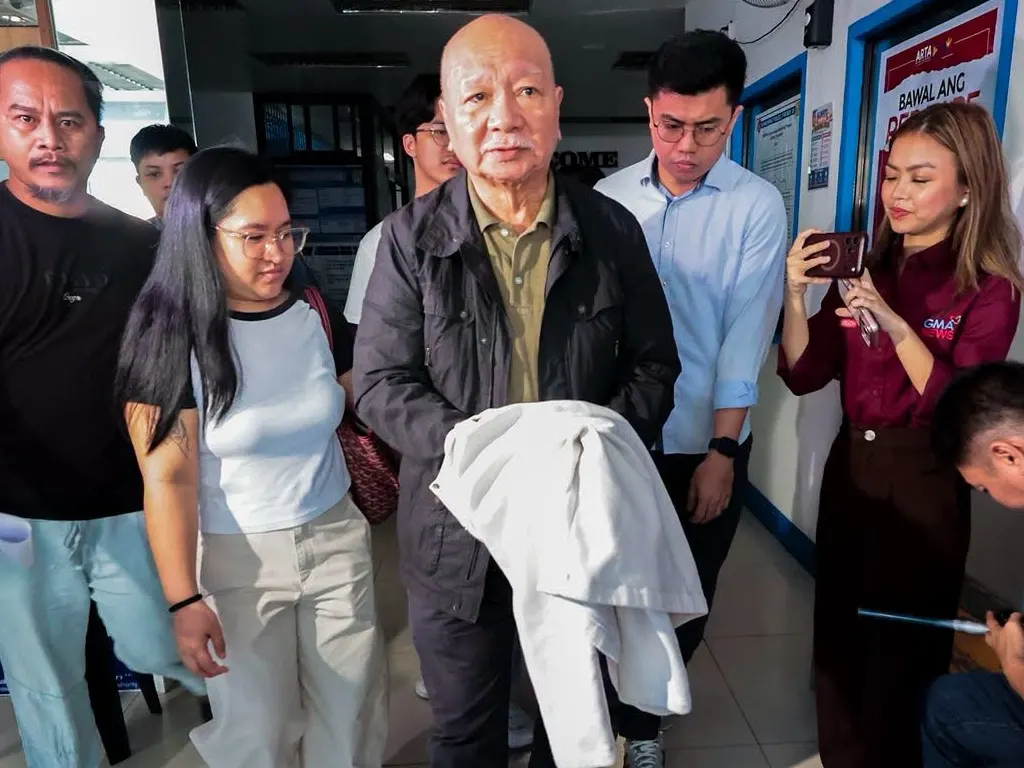
HOUSE prosecution panel member and Bicol Saro Party-list Rep. Terry Ridon on Wednesday backed calls to review the country’s libel laws, saying the arrest of veteran journalist Philip Lustre Jr. highlights the need to protect both people’s reputations and press freedom.
Ridon said Congress should examine whether existing laws strike a fair balance between giving people a way to defend their good name and allowing journalists to report on issues that matter to the public.
“Protect reputations, yes. Silence the press, no,” Ridon said.
“Journalists should not be afraid to ask tough questions,” he added.
The lawmaker’s statement came after human rights lawyer Dino de Leon, Lustre’s counsel, renewed his call to decriminalize libel and cyberlibel during a press conference at Dapo Restaurant on Wednesday.
Lustre, 72, was arrested in Quezon City on October 24 under a warrant issued by a Davao City court over a cyberlibel complaint filed by lawyer Manases “Mans” Carpio, husband of Vice President Sara Duterte.
Lustre was later released after posting P48,000 bail.
At the press conference, De Leon said Lustre had not received the complaint or a subpoena giving him a chance to answer the allegations before the case reached court. He urged the Department of Justice (DOJ) to investigate how the complaint was handled and determine whether proper procedures were followed.
De Leon also questioned the impartiality of the prosecution office handling the case, citing information he received that Davao City Prosecutor Jhopee Salvador Avanceña is the first cousin of Honeylet Avanceña, the longtime partner of former President Rodrigo Duterte.
He said the DOJ should verify the reported relationship and determine whether the prosecutor should step aside.
Ridon said these concerns strengthen the need to examine how the law works and whether the threat of criminal prosecution could discourage journalists from reporting on controversial issues.
“People have the right to seek justice. But the public also has the right to know,” Ridon said.
He stressed that reviewing libel laws would not mean giving journalists a free pass to publish false or damaging claims.
“False statements must be dealt with. But asking legitimate questions should not be a crime,” he said.
Ridon also pointed out that defending a criminal case can mean costly legal fees, travel expenses and time spent in court—even before a verdict is reached.
“That burden can scare people into silence. Congress should take that seriously,” he said.
Ridon earlier expressed concern over libel and cyberlibel complaints involving media
practitioners, including Lustre and officials and journalists of GMA Network, who were the subjects of a separate complaint filed by Davao City Rep. Paolo “Pulong” Duterte.
During an October 26 press conference, Ridon said the House prosecution panel was prepared to help media practitioners facing legal challenges.
He also questioned the handling of arrest warrants in Lustre’s case and the grave threats case involving Vice President Duterte.
“Reviewing the law is not about protecting anyone from accountability. It is about making sure the law is fair—and that the public is not left in the dark,” Ridon said.
metrosundaily