
THE House of Representatives on Tuesday opened its review of the proposed 2027 national budget to civil society organizations, stressing that public participation must be an integral part of deciding how taxpayers’ money is allocated and spent.
The House Committee on Appropriations, chaired by Nueva Ecija Rep. Mikaela Angela Suansing, held the second cycle of the People’s Budget Review at Villar Hall, where representatives of 13 civil society organizations raised concerns, priorities and recommendations on the proposed national budget.
The participating CSOs were Bitag Media Unlimited Inc.; Caucus of Development NGO Networks (CODE-NGO); Center of Youth Advocacy and Networking (CYAN); Jesse M. Robredo Institute of Governance; GoodGovPH; IBON Foundation; Makati Business Club; Move As One Coalition; People’s Budget Coalition; Philippine Association of Agriculturists Inc.; Task Force Mapalad National Peasant Federation (TFM); REID Foundation; and SafeTravelPH Mobility Innovations Organization.
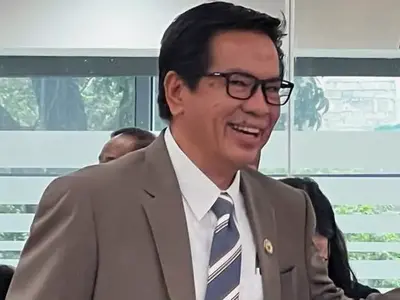
Senior Vice Chairperson and Bataan Rep. Albert “Abet” Garcia, who led the activity together with Vice Chairpersons Reps. Bella Vanessa B. Suansing, Reynante U. Arrogancia, Maria Angela S. Garcia, Arnie B. Fuentebella, Anna York P. Bondoc, M.D., and Monique Yazmin Maria Q. Lagdameo, said the exercise goes beyond discussing government spending figures.
“Today is more than a discussion of figures and allocations. It is a reaffirmation of a principle at the heart of democracy: the national budget belongs to the people, and therefore the people must have a voice in shaping it,” Garcia said.
He explained that the House has taken steps to institutionalize citizen participation through House Resolution No. 94 and subsequent memorandum circulars that created mechanisms for civil society involvement in budget legislation and oversight.
“This People’s Budget Review is proof of that commitment — a living mechanism for transparency, accountability, and partnership,” Garcia said.
Garcia also cited reforms introduced in the previous budget cycle, including the establishment of the Budget Amendments and Review Subcommittee and the livestreaming of its proceedings, as well as those of the Bicameral Conference Committee, to give the public greater access to the congressional budget process.
He said the proposed Philippine Budgeting Code would further institutionalize stakeholder participation by requiring consultations with CSOs, academe and local development councils, expanding access to open budget data and citizen-friendly documents, and establishing a bottom-up budgeting process where proposed projects originate from local planning mechanisms.
“This prevents arbitrary insertions and guarantees responsiveness to real community needs,” Garcia said.
The participating lawmakers likewise engaged CSO representatives on their concerns and committed to raise relevant issues and recommendations with concerned national government agencies during plenary deliberations on the proposed 2027 national budget.
Garcia stressed that greater public participation strengthens rather than diminishes representative institutions by allowing Congress to consider the actual experiences and priorities of communities when making budget decisions.
“Ultimately, people’s participation is not about diminishing the role of elected institutions. It is about enriching decision-making with the lived experiences, insights, and aspirations of our communities. It is about building a budget process that is transparent, participatory, accountable, and truly responsive to the needs of every Filipino,” he said.
“As we begin today’s review, let us embrace this engagement not as a one-time consultation, but as part of a continuing partnership between Congress and the people. Together, we can ensure that every peso in the national budget is spent with merit, with purpose, and with the people at its core.”
metrosundaily