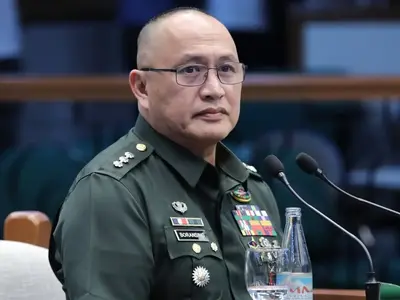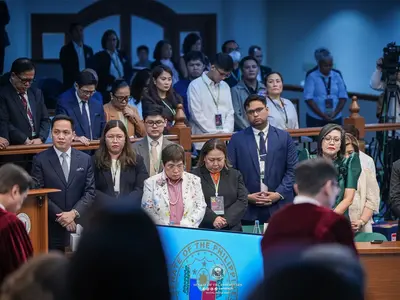
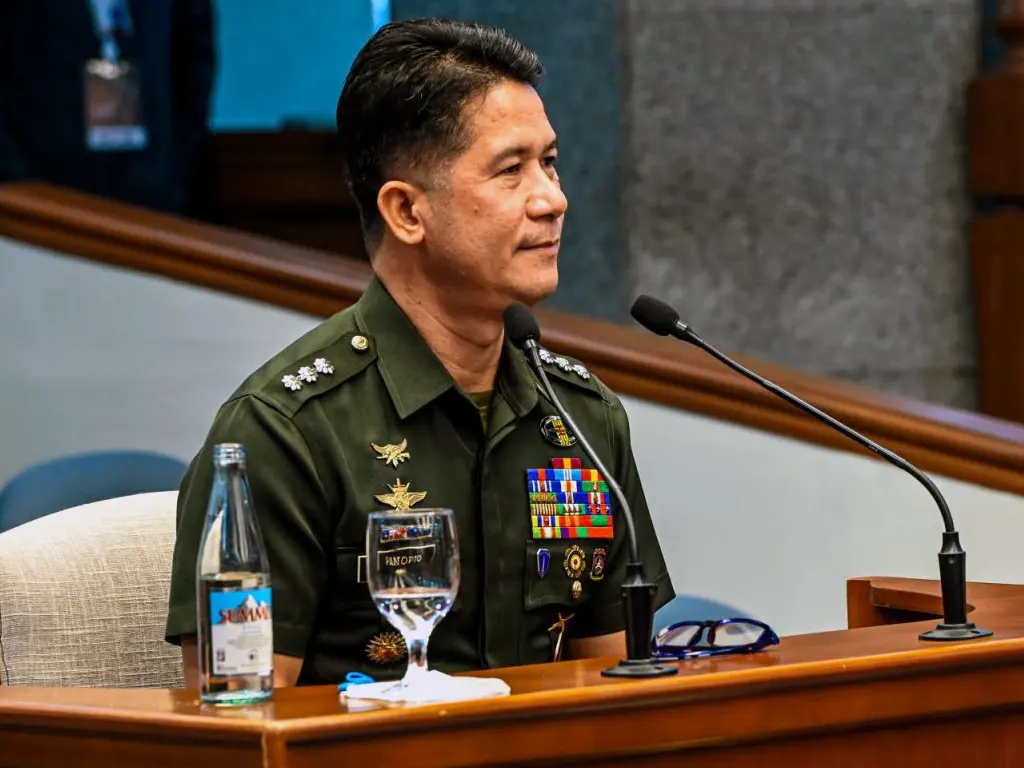
THE Department of Education’s (DepEd) information used in planning Army Youth Leadership Summits (YLS) came through coordination with teachers, schools, local governments and communities, Col. Magtanggol Panopio testified Tuesday—without identifying a paid informer or intelligence product connected to DepEd’s ₱15.54-million confidential-fund reward claim.
Panopio’s answers before the Senate Impeachment Court are important because his certification stated that areas for the summits were identified through information obtained primarily from DepEd and that information exchange supported military operations focused on protecting schools.
Senate President Win Gatchalian questioned what kind of information that language described and whether it was confidential or surveillance information.
Panopio explained that site selection began with ordinary interagency planning.
“When we conduct YLS, we are following different phases. During the planning phase, we are coordinating with different agencies like the LGUs, the schools and the community kung saan po namin iko-conduct iyong YLS,” he said.
Asked who within DepEd supplied the information, Panopio did not identify a national official, confidential agent or paid source. He pointed principally to school personnel participating in local coordination.
“I assume that it came from the teachers on the ground as members of DepEd, who provided us the information on how and where to conduct the YLS, Your Honor,” he said.
He later identified teachers on the ground as the personnel he believed were being referred to in the certification.
Panopio did not claim that every input was public. He initially described the information, based on experience, as potentially mixed: “So I think iyong information na ito ay masasabi natin na somehow mayroong confidential or mayroong open-source. But based on experience, it is mixed, Your Honor.”
Gatchalian then required him to identify the actual subject matter. Panopio cited conditions known within communities, including disaster-response concerns, parenting, terrorism and communism, drug abuse and family matters.
When asked whether those were confidential, he clarified: “It is open-source information because it is known in the community.”
Pressed for an example of genuinely confidential information from DepEd, Panopio did not cite an intelligence report, surveillance record or informer’s disclosure. He expressly characterized his answer as speculation.
“I can speculate only, or maybe the personal circumstances like teenage pregnancies or other personal information na maging confidential because it is their personal life, Your Honor,” he said.
Senator-Judge Erwin Tulfo separately described the YLS and Information Education Communication campaign as community-relations activities intended to win public trust, rather than intelligence-gathering operations. Panopio agreed with that characterization and limited his institutional knowledge accordingly.
“I can only speak for the civil-military operations activities, Your Honor. Iyong activities ng intelligence community, they have their own, Your Honor,” Panopio said.
He also acknowledged that he was not positioned to explain the funding distinction at the center of the trial. Asked whether he knew the difference between confidential funds used by civilian agencies and intelligence funds used by military or police organizations, Panopio answered: “With respect to the topic for today, I don’t have any idea, Your Honor.”
metrosundaily