Editorial
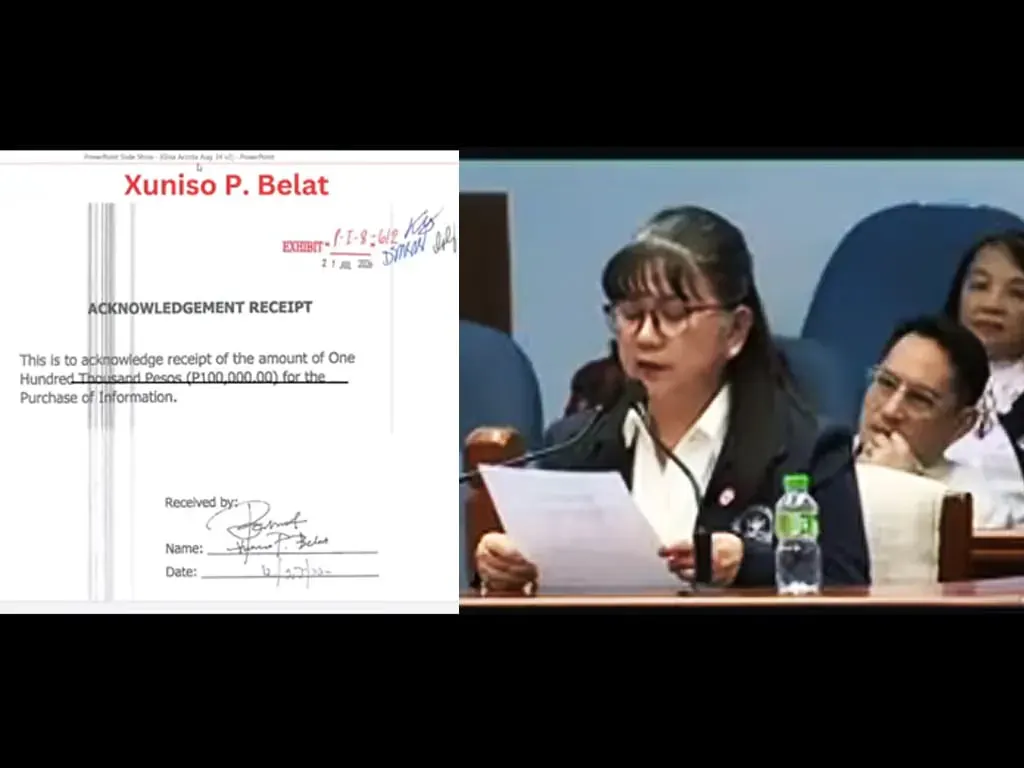
XUNISO P. Belat is not a person. It is a joke. A made-up name, a ridiculous alias scrawled on official Acknowledgement Receipts to sign for taxpayer money—confidential funds entrusted to the Office of the Vice President.
They turned public accountability into a cheap comedy, thinking no one would notice, or that no one would dare call it out. They turned names into a circus, and the public treasury into a laughingstock.
Make no mistake: this is no harmless typo or innocent clerical error. Using a fictitious name to receive public funds is an intentional act. It is a way to ensure that no real face, no real official, no accountable soul can ever be traced to the money. An Acknowledgement Receipt exists to pin responsibility—to answer the single most basic question in public finance: Who took the money? When the answer is a laughable alias, there is no answer at all. There is only a deliberate, calculated effort to destroy the paper trail, to sever the chain of responsibility, and to leave the people with nothing but a name that belongs to no one.
And it was not a one-time trick. Former officials have admitted that these exact same procedures—this same casual, brazen disregard for verification and honesty—were standard practice years ago in Davao City. This was not carelessness; it was a system. A habit. A culture where confidential funds were treated not as a sacred trust granted by law, but as a private slush fund anyone could claim so long as they hid behind a made-up name. Secrecy meant to protect national interest was twisted into a cloak to hide misappropriation, and confidentiality became nothing more than a license to remain nameless, faceless, and unaccountable.
They made names a circus, but there is nothing funny about what lies beneath. Behind every false signature and invented identity is a gap where public trust used to be. If they will lie about something as simple as a name—if they will mock the very first rule of accountability—what else are they lying about? How much money changed hands under aliases? Who really received it? And why does the Office of the Vice President think it can treat the Filipino people with such open contempt? The joke is wearing thin. Soon, someone will have to answer—and this time, a fake name will not be enough.
metrosundaily