
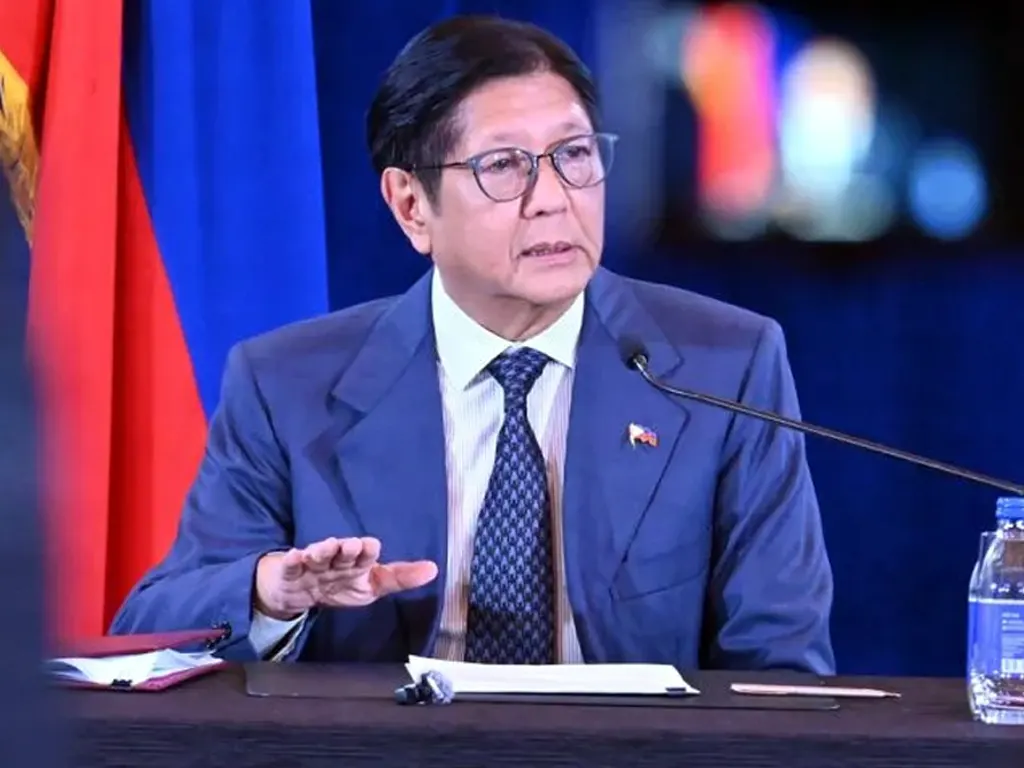
A consumer-based think tank urged President Ferdinand R. Marcos Jr. to immediately declare a State of Calamity in the areas worst hit by Tropical Cyclones Luis and Maymay and the enhanced Southwest Monsoon, saying government must act before a natural disaster becomes both a humanitarian and consumer crisis.
“The President should not wait for the damage to become even worse before declaring a State of Calamity,” said Former Partylist Representative and CONSUMA PH founder and spokesperson Atty. Nat Oducado. “The law already gives government the tools to protect lives, livelihoods and consumers when disaster strikes.”
Oducado warned that disasters can create ideal conditions for panic buying, hoarding, profiteering and artificial shortages, particularly when transportation and distribution networks are disrupted.
“Republic Act No. 7581, or the Price Act, provides for the automatic freezing of prices of basic necessities at their prevailing prices when an area is declared under a State of Calamity, unless otherwise declared by the President,” Odcucado cited. “Under Section 6 of the Price Act, the automatic price control applies when an area is proclaimed or declared a disaster area or placed under a State of Calamity, with the price control generally remaining effective for the duration of the condition that caused it.”
The National Disaster Risk Reduction and Management Council has reported that the combined effects of Luis, Maymay and Habagat have affected more than 382,000 people or about 110,000 families across eight regions, with the number continuing to rise as heavy rains persist.
“Declaring a State of Calamity is not just about releasing funds after the disaster, it is also about protecting the purchasing power of the families who survived it,” Oducado said. “Exploitation and profiteering by some adds to the suffering of disaster victims and government has a duty to prevent it.”
According to CONSU
A PH, Republic Act No. 10121, or the Philippine Disaster Risk Reduction and Management Act of 2010, will help consumerss during this time as the declaration of a State of Calamity triggers mandatory remedial measures, including the imposition of price ceilings on basic necessities and prime commodities upon the recommendation required under the Price Act.
“The same law requires mechanisms to monitor and prevent overpricing, profiteering and hoarding of prime commodities, medicines and petroleum products, while also providing for the programming or reprogramming of funds for the repair and safety upgrading of public infrastructure,” Oducado stressed.
RA 10121 also provides for no-interest loans through government financing or lending institutions to the most affected sectors through cooperatives or people’s organizations, giving disaster victims another mechanism to begin rebuilding their livelihoods.
“The law is clear: when calamity strikes, government is supposed to move faster, protect consumers and help affected communities recover, not simply count the damage after everything is over,” Oducado noted.
Oducado explained that Section 16 of RA 10121 expressly allows the declaration to cover a cluster of barangays, municipalities, cities, provinces or regions, meaning the President does not have to impose a blanket nationwide declaration if the devastation is concentrated in particular areas.
“We are not asking Malacañang to declare the entire country under a State of Calamity; we are asking the President to identify the communities that have borne the brunt of this disaster and give them the full protection and assistance that the law provides,” Oducado emphasized.
CONSUMA PH said the declaration should immediately be followed by intensified rescue and relief operations, restoration of roads and bridges, clearing of landslides and flood debris, restoration of electricity and water services, delivery of food and medicines, assistance to displaced families, and support for farmers, fisherfolk, workers and small businesses whose livelihoods have been disrupted.
Oducado also called on the Department of Trade and Industry and local price coordination councils to immediately prepare for possible shortages and price manipulation in affected communities.
“We should not allow a situation where a family that has just lost its house is then forced to pay more for rice, food, medicine, water and other necessities because someone decided to take advantage of the disaster,” he said.
CONSUMA PH said the President’s action would also send a clear message to local governments and national agencies that the priority is not merely to respond to the immediate emergency but to restore the normal economic life of affected communities as quickly as possible.
Previous presidential declarations demonstrate that a State of Calamity can be used precisely for this purpose, with Proclamation No. 84 issued in 2022 after Severe Tropical Storm Paeng explicitly citing the need to hasten rescue, recovery, relief and rehabilitation and effectively control prices of basic necessities and prime commodities.
More recently, President Marcos’ 2025 declaration of a State of National Calamity following Typhoon Tino likewise cited the acceleration of rescue, recovery, relief and rehabilitation, price controls, prevention of overpricing and hoarding, no-interest loans for affected sectors, and greater latitude for government in utilizing appropriate funds for disaster response.
“We have seen the President declare calamity in previous disasters because the circumstances demanded extraordinary speed and extraordinary government action, and the same principle should apply to the communities now bearing the brunt of Luis, Maymay and Habagat,” Oducado concluded.
metrosundaily