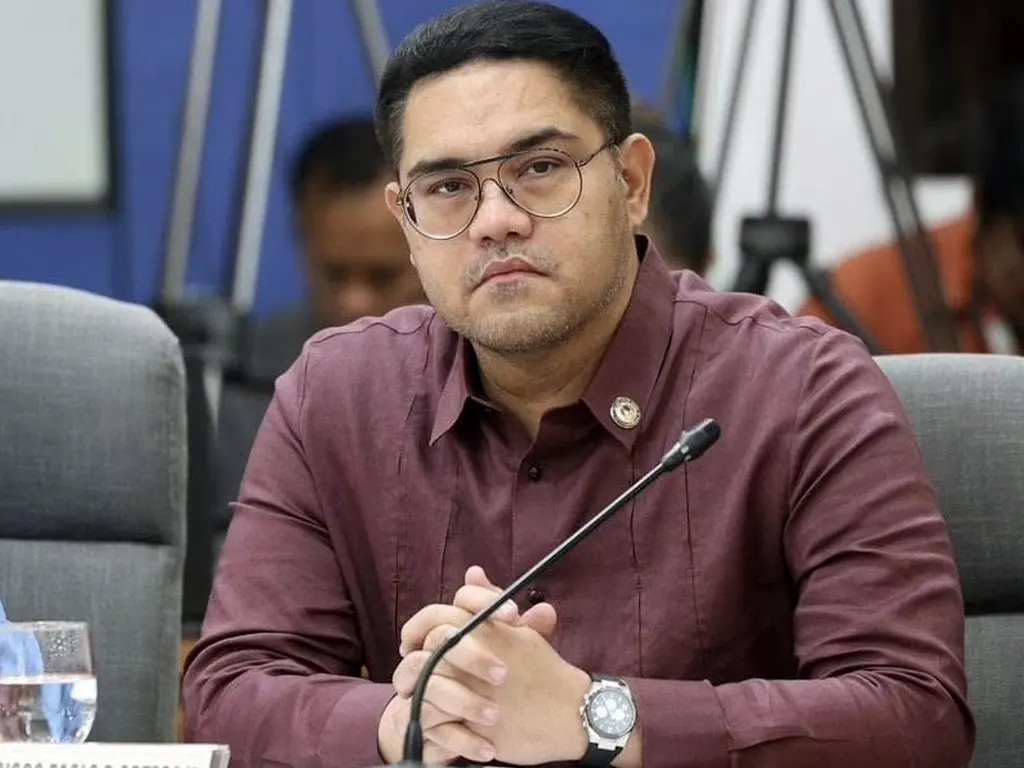
DEPUTY Speaker Francisco Paolo Ortega V on Wednesday questioned the reported use of medicines as rewards for alleged confidential fund informants of Vice President Sara Z. Duterte, saying the practice raises serious questions about whether the payments were consistent with the purpose of confidential operations.
Ortega made the remark after Commission on Audit (COA) state auditor Roderick Wamil testified before the Senate impeachment court that he had never encountered cases where medicines were given as rewards for intelligence information until he audited the confidential funds of the Office of the Vice President (OVP) under Duterte.
The confidential funds under scrutiny in the proceedings total P612.5 million, consisting of P500 million released to the OVP from December 2022 to September 2023 and P112.5 million released to the Department of Education (DepEd) in 2023, when Duterte concurrently served as education secretary.
“Nag-aalala ako doon sa mga informant ng confidential funds. Baka may sakit lahat sila, kasi gamot ang binabayad sa kanila,” Ortega told reporters.
He said confidential informants would ordinarily be expected to receive monetary compensation commensurate with the value of the intelligence they provide.
“Kung ako siguro iyong informant, hindi ako tatanggap ng gamot. Siyempre gusto ko compensation. Kasi importante iyong mga impormasyong ibibigay mo. Very crucial iyon sa paghahanap ng, kung may mission man kayo, may mga ine-extract sa inyong impormasyon,” Ortega said.
During trial, Wamil testified that the OVP’s liquidation reports reflected about P122 million worth of medicines charged against confidential funds.
He said the practice was “not normal” based on his nearly 10 years with the Commission on Audit’s Intelligence and Confidential Fund Audit Office (ICFAO), the specialized unit that audits intelligence and confidential funds.
The auditor also testified that the OVP was the first agency where he encountered medicines being given as rewards for intelligence information.
Senator-judge Risa Hontiveros, meanwhile, pointed to an acknowledgment receipt showing that controversial confidential fund recipient Mary Grace Piattos supposedly received P70,000 worth of medicines as a reward.
Asked whether auditors were able to determine what illness Piattos supposedly had or why medicines were given in exchange for intelligence information, Wamil replied that the documents submitted by the OVP provided no such explanation.
Meanwhile, House prosecution legal spokesperson and counsel Atty. Benjamin “Jay” Tolosa Jr. said the audit issue was not merely that medicines were allegedly distributed as rewards, but that the OVP failed to submit documents proving the medicines had actually been purchased.
“Ang sinasabi nila, payment in kind. Pero ang binabayaran nila, it’s for reward or for information pa rin. Instead of cash, medicine ang ibinigay. Doon nagkaroon ng issue,” Tolosa said.
He said Wamil testified that if medicines had indeed been purchased and distributed as rewards, the transactions should have been supported by procurement documents, including official receipts or sales invoices.
“Kung bumili ka ng gamot at iyan ang ibinigay mo as reward, ang hinahanap ng COA, nasaan ang patunay mo na bumili ka talaga ng gamot? Kasi bibilhin mo iyan sa botika, magkakaroon ka dapat ng resibo, magkakaroon ka ng official receipt,” Tolosa said.
Instead, he said, the OVP submitted only acknowledgment receipts.
“Dito walang naipresentang kahit isa dahil puro acknowledgment receipts lang ang sinubmit,” Tolosa said.
Wamil also testified that “provision of medical and food aid” is not among the allowable confidential expenses under Joint Circular No. 2015-01, which governs the release, use, liquidation and audit of intelligence and confidential funds.
The alleged misuse and liquidation of the P612.5 million in confidential funds form the basis of Article I of the impeachment complaint against Duterte.
metrosundaily