HOUSE Deputy Speaker Paolo Ortega V of La Union on Thursday said the so-called Senate Blue Ribbon Committee is clearly weaponizing the flood control probe to target lawmakers supporting the immediate impeachment trial of Vice President Sara Z. Duterte, rather than pursue genuine accountability or pass legislation.
“What we are witnessing is an obvious attempt to discredit the House of Representatives as an institution and undermine the credibility of those tasked by the Constitution to prosecute the impeachment case against Vice President Sara Z. Duterte,” Ortega said in a statement.
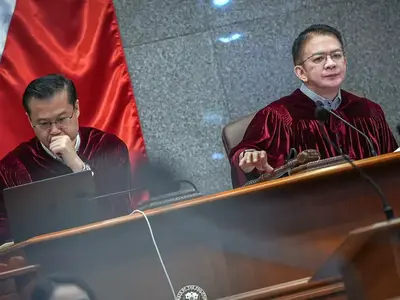
Some senators allied with then-Senate President Alan Peter Cayetano proceeded with a Senate Blue Ribbon Committee hearing on Thursday despite the seeming Cayetano’s ouster on Wednesday and the subsequent reconstitution of the committee under Acting Senate President Sherwin Gatchalian.
Against this backdrop, Ortega said there is a clear pattern in the committee’s recent actions: linking House lawmakers who supported Duterte’s impeachment to corruption allegations even without first presenting clear evidence to support such claims.
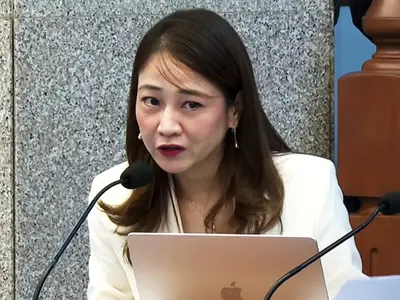
“Among those singled out and accused are House prosecutors Rep. Gerville Luistro, Rep. Joel Chua, Rep. Leila de Lima, and Rep. Terry Ridon, as well as House impeachment spokesperson Rep. Zia Alonto-Adiong. Other House leaders and members identified with the impeachment proceedings have likewise been dragged into the narrative,” Ortega said.
He argued that the hearing, which Cayetano and his allies continue to insist was legitimate, may have been designed to sway public perception on the impeachment process by casting doubt on the credibility of the House of Representatives and those who supported the case against the vice president.
“Before the impeachment court can even convene, before a single witness can testify, and before a single piece of evidence can be formally presented, an effort is already underway to poison public perception against the House and the officials who will participate in the impeachment process,” Ortega said.
“Hindi pa nagsisimula ang paglilitis, pero tila may hatol na agad laban sa mga mag-uusig. Kapag hindi kayang sagutin ang ebidensya, sisiraan na lamang ang mga maghahain nito,” he added.
However, Ortega emphasized that the House of Representatives has only been exercising its constitutional mandate by acting on valid impeachment complaints filed by civil society groups. These complaints were later unanimously found by the Committee on Justice to have probable cause, leading to a plenary vote approving the articles of impeachment and the election of a prosecution panel.
“The House of Representatives exercised a constitutional duty when it approved the Articles of Impeachment. The House prosecutors are performing a constitutional duty when they prepare to present the case before the Senate impeachment court,” he said.
“To attack the prosecutors before trial is to attack the impeachment process itself,” he added.
Ortega stressed that recent developments in the Senate—where political disputes have delayed weeks of hearings on pressing issues and stalled the passage of priority measures—“should alarm every Filipino, regardless of political affiliation.”
“To discredit the messengers before they can present the evidence is to undermine the people’s right to hear the evidence,” he said.
If there is one thing Filipinos must now ask, Ortega said, it is why individuals associated with the impeachment proceedings against the vice president are suddenly being named and accused of wrongdoing in a hearing ostensibly focused on flood control.
“Is this an honest search for truth—or an effort to punish those who exercised their constitutional duty by holding the Vice President accountable? Is this an attempt to weaken, intimidate, or discredit the House prosecutors before they can present their case before the impeachment court?” he said.
Ortega said these questions are necessary for the public to determine whether the Cayetano-led Senate Blue Ribbon Committee’s hearing was a genuine investigation into flood control irregularities or, as he put it, an act of political payback.
What happened in Thursday’s hearing evidently took a page from the Duterte playbook—to cast doubt on critics, undermine the credibility of institutions, and erode public confidence accountability mechanisms before evidence and the full truth can even be heard.
“Kung hindi mapigilan ang impeachment, pahinain ang mga mag-uusig. Kung hindi masagot ang ebidensya, ilihis ang usapan. Kung hindi kayang depensahan ang akusado, unahin na lamang siraan ang mga taga-usig,” Ortega added.
Regardless of who leads the Senate, or how many disputes it may have, the deputy speaker maintained that the allegations against the vice president need to be addressed and the Filipino people deserve answers.
“The real issue remains the same: the serious allegations contained in the Articles of Impeachment and the evidence supporting them. No amount of political theater can change that. No amount of character assassination can erase documentary evidence,” he said.
“And no amount of diversion can prevent the truth from emerging in the proper constitutional forum,” he added.
Ortega said the House will remain focused on preparing and presenting its case based on evidence, documents, and sworn testimonies, and expressed confidence that the Senate impeachment court will proceed with a full and fair hearing once the trial begins.
“The House of Representatives will not be intimidated. The House prosecutors will not be distracted. And the constitutional process must not be derailed by a campaign designed to influence the outcome of an impeachment trial before it even begins,” he stressed.
“The Filipino people deserve a fair impeachment trial based on facts, documents, sworn testimony, and evidence—not a political operation intended to save Vice President Sara Duterte before the Senate impeachment court can even hear the case,” Ortega added.
metrosundaily