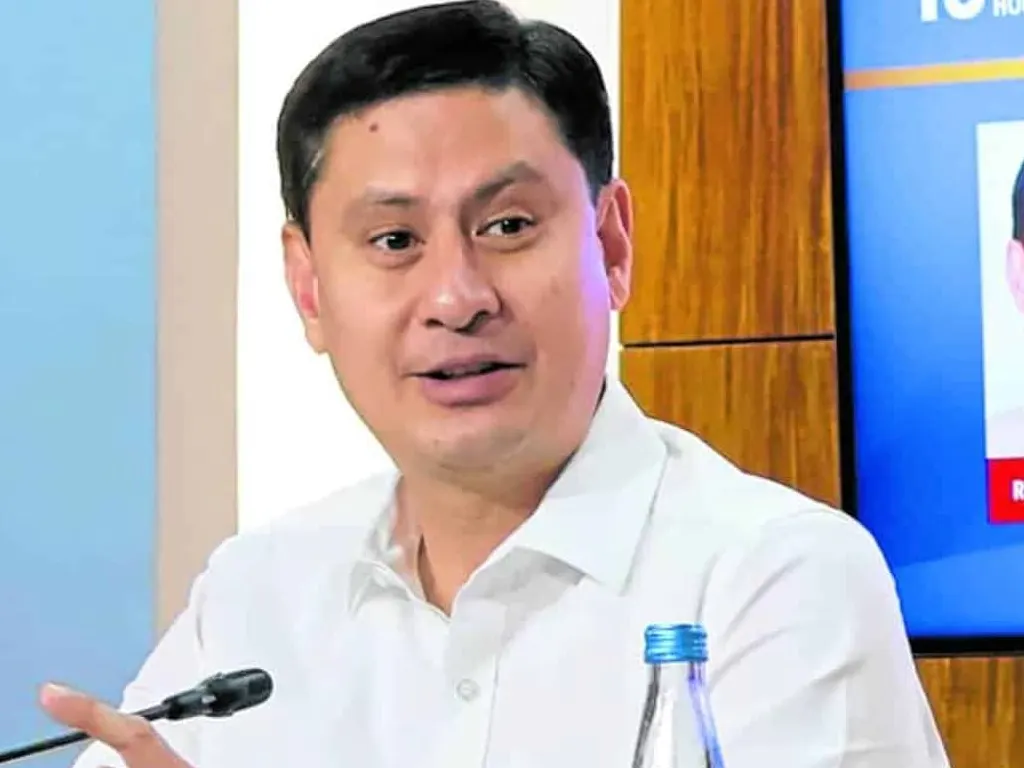
HOUSE prosecutor and Senior Deputy Majority Leader Lorenz Defensor of Iloilo said Tuesday that a conviction in the impeachment trial of Vice President Sara Z. Duterte remains achievable, even amid political tensions in the Senate, provided that senator-judges are able to carefully evaluate the evidence presented.
In an interview on ANC’s “Headstart”, Defensor said he believes the presentation of evidence before the Senate impeachment court could influence voting patterns, citing parallels with the House proceedings where support for impeachment strengthened as hearings progressed.
“I’m optimistic, that if they get to see the evidence before them, baka makumbinsi din ang iba sa kanila. Katulad nung nangyari sa Kongreso na kung kailan lumabas ang ebidensya, maraming marami palang bumoto,” he said.
While the prosecution panel is confident in its legal strategy, Defensor also acknowledged that securing a two-thirds vote in the Senate would still be difficult based on current political alignments.
“But if you look at it right now based on their affiliations, mahirap makakuha ng two-thirds of all the members of the Senate to convict,” he said.
Defensor recalled that even before the House Committee on Justice began its hearings, there was uncertainty over the number of lawmakers who would support impeachment. Some expressed reluctance to pursue the impeachment hearings unless new evidence came to light.
“In fact, before the Committee on Justice hearing started, hindi ko alam kung ano ang numero na boboto pabor,” he said.
The momentum, however, shifted once evidence was presented and testimonies were laid out during committee hearings, which Defensor said strengthened support for a vote in favor of impeachment among House members.
“But when the Committee on Justice started the hearings and laid down the evidence based on the complaints filed, tumatag ang loob ng mga membro ng Kongreso para bumoto pabor sa impeachment,” he said, noting that Duterte’s refusal to directly respond to the allegations also factored into lawmakers’ decision-making.
This, he stressed, eventually led to the House Committee on Justice’s unanimous vote on finding probable cause to recommend the vice president’s impeachment—and later, the landslide vote of 257-25-9 at the plenary.
Although political alliances in the Senate may affect the impeachment trial, Defensor stressed that the process is both legal and political in nature, making public opinion a relevant factor in its outcome.
“That is why the impeachment is not strictly a judicial process. It is a political process na kahit ang taong bayan ay pwedeng makisali at ang mga opinyon ng tao ay pwedeng mag-sway sa ating mga senador,” he said.
He cited recent OCTA Research survey results which showed rising public support for the continuation of the impeachment trial, from 69% in the first quarter to 74% in the second.
“Seven out of ten Filipinos want the impeachment to continue,” he said. “At katok na ‘yan sa pinto ng bawat senator-judge na pakinggan natin ang ebidensya at sunduin lang natin ang proseso.”
Asked about expectations for how the Senate will handle the trial, Defensor said political realities in the upper chamber cannot be ignored.
“We understand clearly that the impeachment is a political question. At tanggap namin sa isang institution like the Senate, hindi maiiwasang may affiliation ka. Majority ka, may partido ka. And we accept that,” he said.
Still, he emphasized that senators will also be judged by the public based on their conduct during the proceedings.
“But we also see the fact that how our senator-judges will act during the Senate trial will also be a judgment, will also be a basis for the people to judge them—whether people like it or not, and whether the people will re-elect them or not,” he said.
Defensor added that this places a responsibility on senator-judges to set aside political biases and decide based solely on evidence.
“So paghamon din ‘yan sa kanila na maging patas. Ang kanilang apiliyasyon, pagkampihan at kanilang partido ay dapat isantabi nila kasi ebidensya lang dapat ang magdidikta paano sila magdedesisyon,” he said.
He stressed that while concerns over political alignment are valid, accountability ultimately extends to public judgment.
“So if I’m worried that they have party affiliations, of course I am. But I also look at it in a way na sila ang huhusgahan ng tao kung paano nila galawin at paano nila husgahan itong impeachment trial na ito,” he said.
The Senate leadership changed since the vice president was impeached, with the new majority now composed of senators publicly seen as aligned with the Dutertes. The division between them and the minority, however, lies on a thin line as 11 members comprise the latter.
For Duterte to be convicted, the prosecution must secure at least two-thirds or 16 votes from all 24 senator-judges. The impeachment trial is expected to begin in July, following pre-trial proceedings conducted by the impeachment court.
metrosundaily