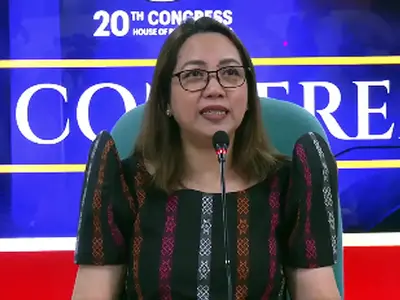
HOUSE Committee on Higher and Technical Education chair Jude A. Acidre of Tingog Party-list on Tuesday called for a congressional investigation into what he described as the alarming rise of “digital blackmail outfits” masquerading as media organizations or political commentary platforms, warning that social media is increasingly being weaponized for intimidation, coercion, and alleged extortion.
In a strongly worded privilege speech before the House of Representatives, Acidre, Chair of the Committee on Higher Education, announced plans to file a resolution seeking an inquiry, in aid of legislation, into alleged extortion activities involving online political operators and social media influencers.
The move came in the wake of reports that Peanut Gallery Media Network (PGMN) founder Franco Mabanta and several others were arrested during an alleged NBI entrapment operation tied to claims of a ₱300-million payoff demand in exchange for withholding damaging online content.
Acidre stressed that the issue goes beyond one individual or one platform and reflects a growing threat to democratic discourse and legitimate journalism itself.
“When a group allegedly prepares damaging material, holds it back, and demands money in exchange for not releasing it, that is not journalism,” Acidre said. “That is alleged extortion.”
The lawmaker warned that some online networks have evolved into what he called “digital blackmail outfits” — entities that allegedly use viral accusations, reputational attacks, and coordinated social media pressure campaigns as leverage for money, influence, or political objectives.
“A journalist investigates to inform the public. An extortionist threatens to profit from fear,” Acidre said in one of the speech’s strongest passages.
He lamented that the blurring of lines between legitimate journalism and politically motivated digital operations is eroding public trust in media institutions and poisoning public debate.
“They make citizens ask whether exposes are done for truth or for payment,” he said.
Acidre said his proposed inquiry would examine whether online commentators, influencers, and digital media personalities who actively shape public opinion should also be held to basic standards of truthfulness, verification, accountability, and transparency.
“This is not about silencing criticism,” he emphasized. “This is about separating criticism from criminal coercion.”
The lawmaker also called for stronger systems to address coordinated online harassment, manipulation, impersonation, and alleged extortion schemes conducted through social media platforms.
Acidre warned that democracy itself is endangered when “lies are monetized” and “accusation becomes a business model.”
“Social media must never become a marketplace where reputations are held hostage for money,” he said. “Let us choose journalism over blackmail. Let us choose democracy over digital lawlessness.”
metrosundaily