
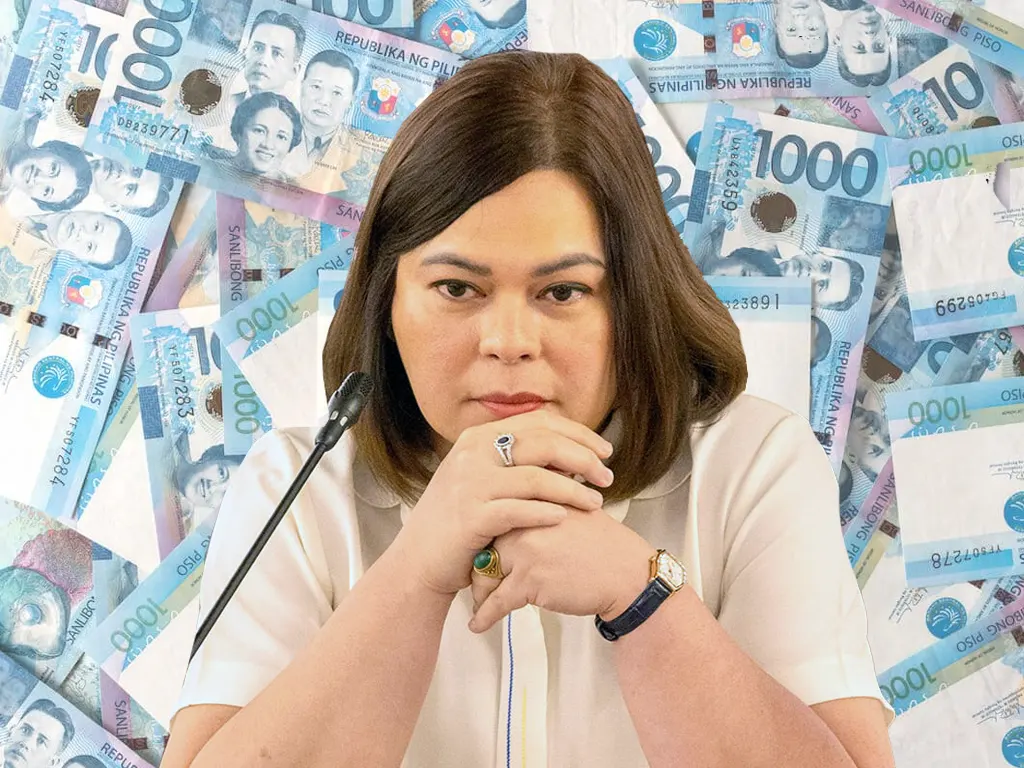
THE Chair of the House Committee on Good Government and Public Accountability and member of the House Committee on Justice, Manila Rep. Joel Chua, on Friday said that official records from the Anti-Money Laundering Council (AMLC) raise serious and unavoidable questions about the true financial standing of Vice President Sara Z. Duterte.
“The AMLC records have shown that VP Sara Duterte is a billionaire. Lumabas na ang totoo: bilyonaryo ang ating Vice President. It is an undisputed fact—not based on mere testimony, but on official documents and government records that, until now, have remained beyond public scrutiny,” Chua, a lawyer, said.
He stressed that the magnitude and frequency of transactions reflected in the AMLC documents cannot be brushed aside or trivialized.
“Bilyon-bilyon ang pumasok sa kanyang mga bank accounts. Hindi ito haka-haka. Hindi ito opinyon. Ito ay nakabatay sa dokumento ng gobyerno mismo. Hindi niya puwedeng itanggi ito,” Chua emphasized.
Chua said the burden now squarely rests on the Vice President to provide a clear, credible, and verifiable explanation.
“The only question that must be answered is simple but fundamental: Who gave her money of this magnitude, and why was she receiving such amounts regularly?” he said.
“Sino ang nagbibigay sa kanya ng ganitong kalaking pera—at bakit? Ano ang kapalit?” Chua asked.
The lawmaker also raised the issue of non-disclosure, pointing out a glaring inconsistency between the AMLC findings and Duterte’s declared assets in her Statements of Assets, Liabilities, and Net Worth (SALNs).
“Another question that lingers in the mind of the public: Why were these billions hidden? Bakit hindi ito nakalagay sa kanyang SALN? Bakit ipinagpipilitan pa rin nila na sila ay ‘walang-wala’?” Chua asked.
He further challenged claims that the funds could have originated from legitimate business activities.
“Kung sasabihin nilang galing sa negosyo, malinaw sa mga rekord ng Securities and Exchange Commission na ang ilan sa mga kumpanyang inuugnay sa kanila ay lugi o hindi kumikita sa antas na makapagpapaliwanag ng bilyong pisong daloy ng pera,” he noted.
Chua added that the next critical layer of verification lies in tax records, which could either validate or dismantle the narrative of lawful earnings.
“Malinaw na susunod naming titignan ang rekord ng Bureau of Internal Revenue. Kung ang sinasabing kita ay hindi tumutugma sa binayarang buwis, lalong titibay ang duda ng publiko,” he said.
“Kung kumita sila ng bilyon sa negosyo o sa law firm, dapat malinaw ito sa tax filings. Kung hindi nagtutugma ang kita at buwis, malinaw na may problema,” Chua said.
The chairman underscored that the issue is no longer political—but legal and institutional.
“At this point, the matter transcends politics. This is about accountability under the law. When there is a clear disparity between declared assets, documented financial flows, and potential tax liabilities, it points to a possible case of unexplained wealth,” Chua said.
“Kapag hindi maipaliwanag ang pinanggalingan ng yaman, at hindi ito idineklara nang tama, malinaw na may pananagutan. Hindi ito usapin ng opinyon—ito ay usapin ng batas,” Chua said.
Chua concluded by reaffirming the committee’s commitment to pursue the truth through documentary evidence and institutional processes.
“The Filipino people deserve full transparency. Hindi puwedeng manahimik na lang sa harap ng ganitong kalalaking tanong. Pananagutan ito—at dapat itong sagutin,” Chua said.
metrosundaily