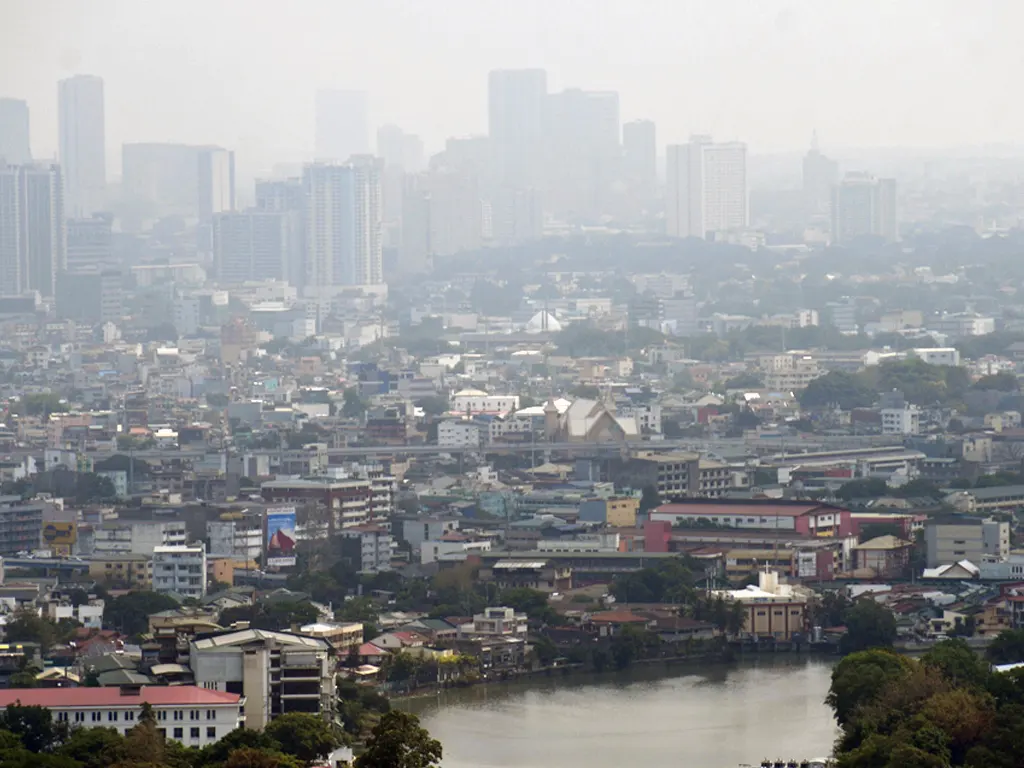
AIR quality in several parts of Metro Manila reached “acutely unhealthy” levels on Saturday afternoon, prompting advisories for residents to take protective measures.
The Environmental Management Bureau (EMB) of the Department of Environment and Natural Resources (DENR) reported that Marikina and Valenzuela City experienced the highest levels of fine particulate matter (PM 2.5) at 3 PM on Saturday, classifying their air quality as acutely unhealthy.
The EMB’s Air Quality Index (AQI) also indicated “very unhealthy” conditions in Caloocan, Malabon, and Quezon City. Residents in these areas were advised to limit their outdoor activities and wear respiratory protection, such as N95 masks, to mitigate potential health risks.
Additionally, Navotas and San Juan City recorded “unhealthy for sensitive groups” levels of PM 2.5. These fine particles are particularly dangerous as they can penetrate deep into the lungs and even enter the bloodstream, posing significant health risks with prolonged exposure.
A major contributing factor to the deteriorating air quality has been identified as the smoke emanating from the Navotas Sanitary Landfill Facility.
This issue has been ongoing since April 10, affecting not only Metro Manila but also adjacent areas. The persistent release of pollutants from the landfill underscores the need for immediate and effective waste management strategies to prevent further environmental and public health degradation.
The DENR’s advisories serve as a critical reminder of the ongoing challenges posed by air pollution in urban environments. The health implications of inhaling PM 2.5 particles are well-documented, ranging from respiratory problems to cardiovascular issues. Residents in the affected areas are urged to adhere to the safety recommendations provided by the authorities to minimize exposure and safeguard their well-being during this period of poor air quality.
metrosundaily