
THE House of Representatives is open to all policy alternatives to help people impacted by the ongoing global oil crisis, including suspending the 12-percent value added tax (VAT).
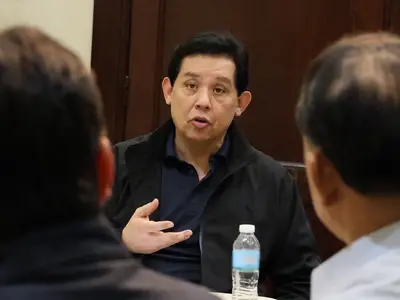
Marikina Rep. Miro Quimbo, who heads Legislative Energy Action and Development (LEAD) committee made this statement during the second hearing of his multi-committee panel on the oil crisis.
“We are open to all options, even proposals on the suspension of VAT or other price reduction methods,” Quimbo said.
“However, as emphasized in our previous discussions, these measures must be carefully studied—not only in terms of the overall fiscal impact, but more importantly, whether they will truly result in meaningful reductions in pump prices for our people without undermining the long-term strength of our economy,” Quimbo said.
Quimbo said the House is looking for real and not easy solutions.
“Hindi lamang ang pinakamabilis o pinakamadaling solusyon ang ating hinahanap. Ang tunay na kailangan natin ay ang wastong balanse ng isang solusyong maagap, epektibo, at responsable,” Quimbo added.
The Marikina House leader recalled that last week, during the first LEAD committee meeting, which was opened by Speaker Faustino “Bojie” G. Dy III, “one thing became clear…the challenge before us is not simple, and certainly not isolated.”
“We saw how the ongoing global conflict has translated into real economic pressures here at home. We were reminded that while supply remains stable for now, the real issue confronting us is affordability and the cascading effects of high prices across the economy,” Quimbo said.
Quimbo said relevant agencies briefed the committee on the response efforts they have been undertaking.
“Mula sa ating mga ahensya, nakita natin ang mga tugon ng pamahalaan mula sa paggamit ng Malampaya Fund, hanggang sa mga repatriation effort para sa ating mga OFW, at sa mga subsidiya na ngayon ay umaabot na sa daan‑daang libong benepisyaryo…Lahat ng datos at impormasyong ating naririnig ay patungo sa paglikha ng komprehensibo, malawakan, at pangmatagalang tugon,” he said.
He informed his panel that it would like to “hear updates on the energy supply and stability—covering fuel supply, pricing mechanisms, and ongoing efforts to secure and diversify our energy sources.
The committee would likewise “examine the status of subsidy and ayuda programs—their implementation,sustainability, and targeting mechanisms.”
“Third, we will focus on the transport sector, which remains among the most directly affected by rising fuel costs. And fourth, we will tackle the situation of the food, agriculture, and fisheries sectors—recognizing that rising fuel prices inevitably translate into higher food costs and increased pressure on our farmers and fisherfolk,” Quimbo said.
He said Monday’s hearing would not be the last.
“We will continue to convene as a Joint Committee in the coming days to ensure that all sectors – especially the most vulnerable and the middle class – are given the attention and support they require,” Quimbo said.
“But for today, our focus is clear: to address the fundamental, cross-cutting issues that determine whether a Filipino family can put food on the table, whether a worker can afford to go to work, and whether our economy can remain stable amid continued uncertainty,” Quimbo stressed.
metrosundaily