A PROPOSAL to shift at least half of the government vehicle fleet to electric vehicles is being studied by the House mega-committee on the energy crisis as part of efforts to reduce the country’s dependence on oil and cushion the impact of rising fuel costs.
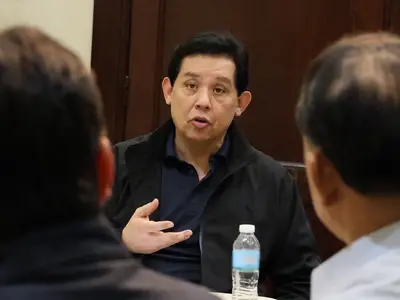
Marikina City Rep. Miro Quimbo, chair of the House Committee on Ways and Means, said over the weekend the measure is among the quickest and most practical steps the government can take to move away from petroleum-based transport, adding that the government itself must lead the transition.
Quimbo said the proposal emerged during the first hearing of the multi-committee Legislative Energy Action Development (LEAD) Council, formed under the direction of Speaker Faustino “Bojie” Dy III, which he presided over as panel chair last Wednesday.
“Pinag-usapan namin nung unang hearing is practically requiring at least half of our government vehicles na baka pwede nang gawing kuryente,” Quimbo said during the Saturday News Forum at Dapo Restaurant in Quezon City.
He said the proposal forms part of a broader long-term strategy to make the economy more resilient against recurring oil price shocks.
“The objective of the mega-committee is to determine how we can insulate or make the economy more resilient if mangyari ulit ang ganitong oil price shock, because alam natin mangyayari at mangyayari ito ulit,” he said.
Quimbo noted that while the Philippines is relatively insulated in power generation, with only a small share relying on diesel, the transport sector remains heavily dependent on oil.
“Maswerte tayo, unlike other countries, 3% lang ang gumagamit ng diesel sa ating power plants. So you can imagine, kung sa ibang bansa nasa 30-35% ang diesel na ginagamit nila, tatamaan talaga ang cost nila kasi madodoble sa isang iglap,” he said.
He stressed the need to accelerate the shift to non-petroleum energy sources, both in power generation and transport.
“So ‘yan ay isang halimbawa, ano ‘yung long term plan natin para mas marami tayong non-petroleum sources of energy pagdating sa ating power generation,” he said.
Quimbo added that the government must also put in place the right incentives to attract investments in emerging industries such as renewable energy, solar and battery production.
“So imbes na petroleum-based, ano ‘yung incentives na kinakailangan nating mailagay sa ekonomiya para mahikayat natin ang iba’t-ibang industriya tulad ng renewable energy, tulad ng solar at baterya, para hindi na tayo maging oil-dependent,” he said.
The LEAD Council, composed of 13 House committees, serves as the chamber’s central platform for coordinating both immediate relief measures and long-term reforms, including policies aimed at reducing oil dependence and strengthening the country’s resilience to global energy shocks.
Quimbo said these long-term measures are critical to protecting the economy and consumers from future fuel price shocks.
metrosundaily