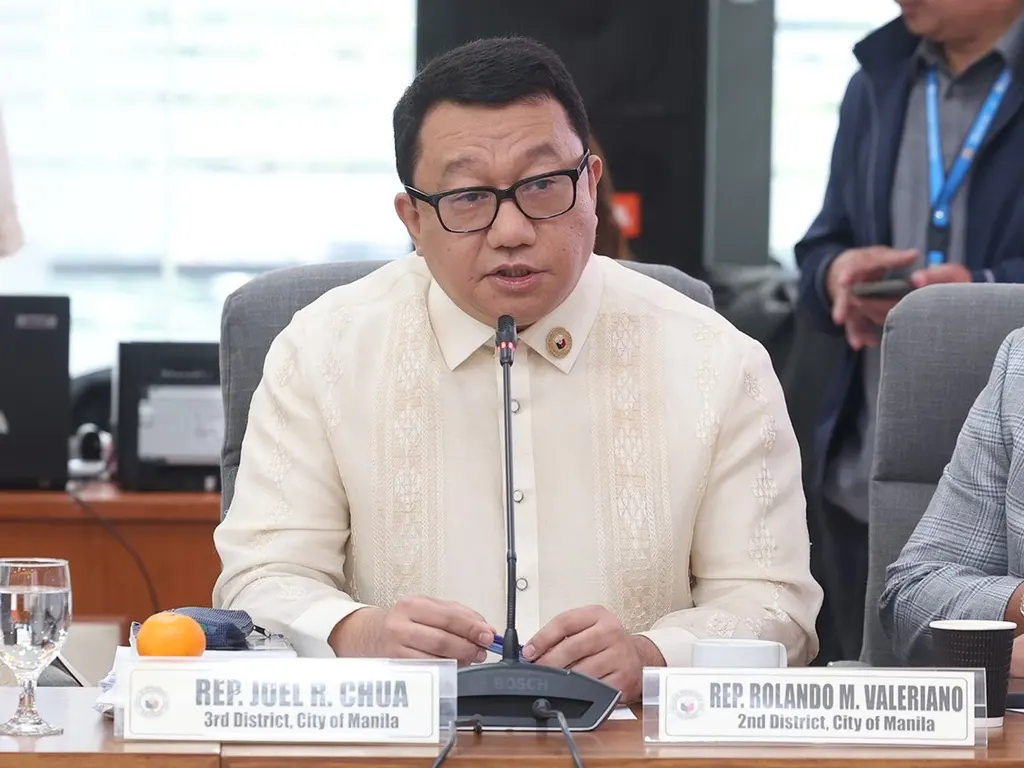
HOUSE Committee on Good Government and Public Accountability chairman Joel Chua of Manila on Thursday said the April 14 proceedings in the impeachment case against Vice President Sara Z. Duterte will be confined to clarificatory matters, stressing that the House is not conducting a trial.
“Ang April 14 hearing ay nakatuon lamang sa clarificatory questions, hindi ito trial. Walang cross-examination sa yugtong ito—hindi pa ito ang tamang forum para doon. Sa Senado iyun,” Chua, a lawyer and member of the House Committee on Justice, said in a statement.
He underscored that the House proceedings remain part of a preliminary investigation, dismissing confusion over the term “mini-trial.”
“Ang paggamit ng terminong ‘mini-trial’ ay simpleng paglalarawan lamang. Sa esensya, ang proseso ay nananatiling preliminary investigation, hindi pa paglilitis,” he explained.
Chua emphasized that the upcoming hearing is not the proper venue for exhaustive scrutiny or detailed defense, noting that such processes belong to the Senate.
“Hindi pa ito ang venue para sa malalimang pagbusisi o detalyadong pagdepensa. Ang masusing pagsusuri, kabilang ang cross-examination, ay mangyayari lamang sa Senate trial proper,” he added.
The House leader said several key resource persons have been invited to appear, including Atty. Cynthia Viñas-Pantonal, who notarized the affidavit of Ramil L. Madriaga; Atty. Wesley T. Poa; Commission on Audit State Auditor 5 Atty. Gloria Camora; Marivic M. Pareja of the House Legislative Archives; Madriaga himself, tagged as the alleged bagman of the Vice President;
Atty. Karen S. Batu, OIC – Central Records Division, Office of the Ombudsman; Atty. Charlito Martin R. Mendoza, Commissioner of the Bureau of Internal Revenue (BIR); Atty. Melvin A. Matibag, Director of the National Bureau of Investigation (NBI); Atty. Francis Edralin Lim, Chairperson of the Securities and Exchange Commission (SEC); National Statistician and Philippine Statistics Authority Chief Claire Dennis S. Mapa, PhD., and other officials.
Chua stressed the importance of their testimonies in establishing the authenticity of evidence submitted before the committee.
“Ang mga tanong ay basic ngunit mahalaga: pagpapatunay ng affidavit, pirma, at boluntaryong pagsumite ng testimonya,” Chua said. “Layunin nitong matiyak na ang mga ebidensya ay lehitimo bago ito umusad sa susunod na yugto.”
He likened the committee’s role to that of prosecutors conducting a preliminary investigation, focused on determining whether there is sufficient basis to move the case forward.
“Ang papel ng komite ay katulad ng isang prosecutor sa preliminary investigation—tinitingnan kung may sapat na basehan ang mga alegasyon,” Chua said.
“Sinusuri kung ang mga testigo at dokumento ay may kredibilidad at may saysay para dalhin sa susunod na antas,” Chua said.
Chua highlighted that verification is crucial at this stage, warning that unsubstantiated claims could weaken the case.
“Kritikal ang pagtiyak na ang mga pahayag at ebidensya ay tunay at hindi mapapasinungalingan. Kung ang isang testigo ay hindi makakapagpatunay sa sariling affidavit o pirma, nawawala ang bigat ng kanyang testimonya,” Chua said.
Despite the limited scope of the proceedings, Chua maintained that the Vice President’s rights are being fully respected.
“Lahat ng posibleng pagkakataon para sa due process ay ibinibigay na sa Vice President. Walang pagkukulang sa pagkakataong makasagot, makalahok, at maipagtanggol ang sarili. The process is open, fair, and fully compliant with constitutional guarantees,” he said.
Chua reiterated that the House proceedings are only the first step, with the full trial to take place in the Senate.
“Ang tunay na ‘full-blown’ na paglilitis—kung saan may cross-examination at masusing paghimay ng ebidensya—ay eksklusibong mangyayari sa Senado,” he said.
“Doon pa lamang ganap na haharap ang depensa at prosekusyon sa mas malalim na pagtatalo ng kaso,” Chua said.
metrosundaily