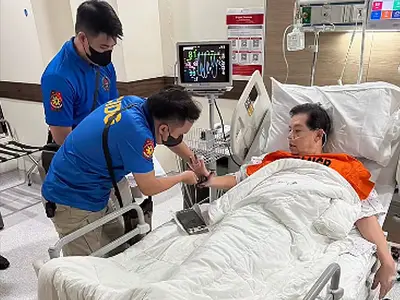

THE National Bureau of Investigation (NBI) has issued a stern warning to the public regarding an alarming increase in fraudulent schemes orchestrated by criminal syndicates.
These syndicates are impersonating government officials and prominent personalities to solicit sponsorships and charitable donations, leveraging the credibility of legitimate non-government organizations (NGOs) to deceive unsuspecting victims. The NBI is urging heightened vigilance as these sophisticated operations exploit public trust and advanced technology.
Victims are reportedly being targeted through various communication channels, including phone calls, text messages, emails, and social media.
Perpetrators falsely claim affiliation with well-known NGOs and leverage the reputations of public figures to gain trust. A particularly concerning tactic involves the use of caller ID spoofing technology, which allows criminals to manipulate phone numbers, making calls and messages appear to originate from legitimate sources. In some cases, even return calls can be routed to seemingly official lines, making verification extremely difficult and increasing the likelihood of deception.
The NBI has identified several common red flags associated with these fraudulent activities. These include unsolicited communications claiming the recipient has been “selected” as a sponsor or donor, an aggressive push for immediate fund transfers, requests for payments to be sent to personal or unofficial accounts, and a lack of formal documentation on official letterheads. To combat these schemes, the NBI strongly advises the public to exercise extreme caution and to refrain from transferring money based solely on unsolicited communications, regardless of how convincing they may seem.
NBI Director Atty. Melvin D. Matibag emphasized the deliberate exploitation of public trust, stating, “These syndicates are deliberately exploiting the public’s trust in government officials and respected personalities. We remind everyone that in today’s digital environment, even legitimate-looking numbers and identities can be manipulated. Vigilance is our first line of defense—verify first before you give.”
The NBI urges individuals who believe they have been targeted or victimized to immediately report such incidents to the NBI Cybercrime Division. All solicitations should be independently verified through official channels, requiring formal documentation and proof of registration with relevant government agencies like the SEC or DSWD. Perpetrators face charges under the Cybercrime Prevention Act of 2012, provisions on Estafa in the Revised Penal Code, and other pertinent laws.
metrosundaily