
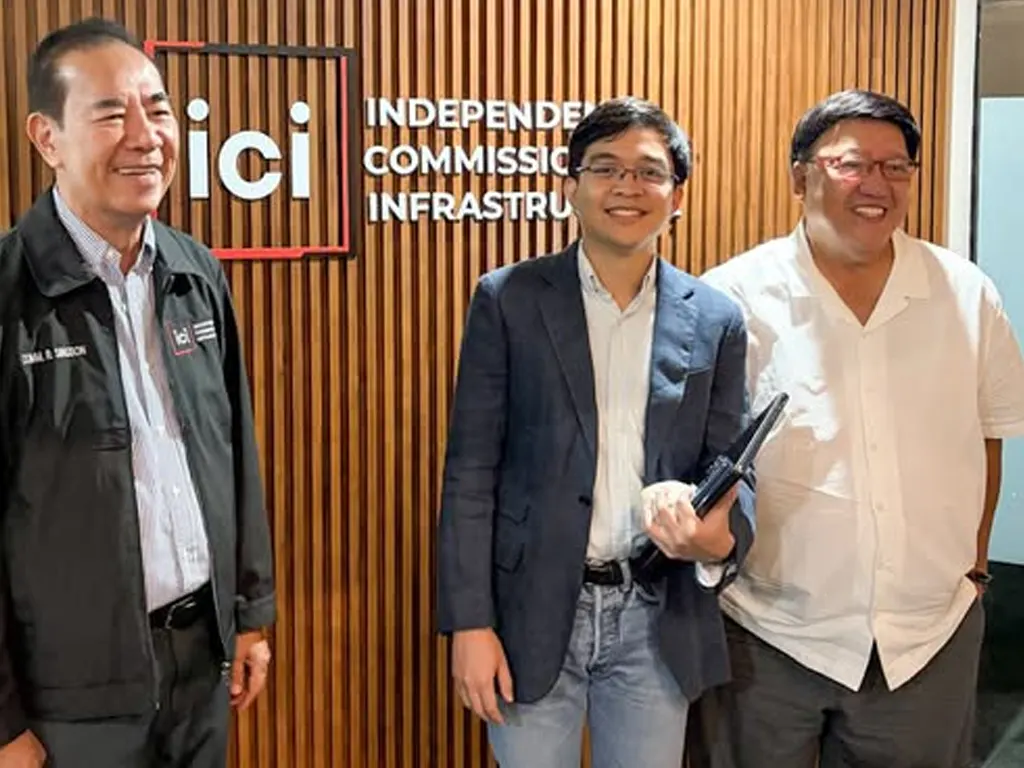
THE Independent Commission for Infrastructure (ICI), established to investigate anomalies in infrastructure spending, has submitted its final report to President Ferdinand “Bongbong” Marcos Jr.
However, the report will not be made public, as its release now rests solely with the President’s discretion. The ICI concluded its operations on March 31 without identifying masterminds of corruption within the Department of Public Works and Highways (DPWH), a conclusion attributed to several critical limitations faced by the commission.
Representative Leandro Leviste expressed his gratitude to ICI Chairman Andy Reyes and the commission members for their efforts, noting their decision to refrain from media appearances and direct quotes in their final days. Leviste highlighted the significant challenges that hampered the ICI’s effectiveness.
The commission lacked contempt powers and immunity, crucial for compelling testimony and ensuring accountability. Furthermore, they operated without a dedicated budget throughout their investigations, and Congress failed to pass a law that would have established an Independent People’s Commission to continue their work. These shortcomings, Leviste argued, prevented the ICI from definitively pinpointing those responsible for corruption within the DPWH.
Despite these limitations, Leviste emphasized the importance of releasing the ICI’s final report, along with the transcripts of all its hearings. He expressed disappointment that the issue of flood control corruption appears to be fading, stating, “We waited for this day to know the outcome of all the investigations conducted.
It is saddening that the flood control issue seems to be simply silenced.” This sentiment was echoed by concerned ICI employees who issued a statement to News5. They lamented the “quiet exit” of the commission, particularly without a formal executive order from Malacañang, raising “urgent concerns about the future of investigations into corruption in flood control projects.”
The ICI employees’ statement further elaborated on the implications of the commission’s closure. The ICI’s creation aimed to investigate anomalies in infrastructure spending, particularly in flood control initiatives that directly affect public safety.
The closure, described as lacking transparency and due process, effectively halts inquiries into alleged overpricing, ghost projects, and kickbacks that have long plagued public works. “The manner of closure — employees told to leave quietly, without a clear directive — undermines confidence in government commitments to reform. This is not just the end of a Commission, it is the silencing of Accountability,” they concluded, underscoring the profound impact of the ICI’s unfulfilled mandate.
metrosundaily