Photo credit: Center for Energy and Development (CEED)
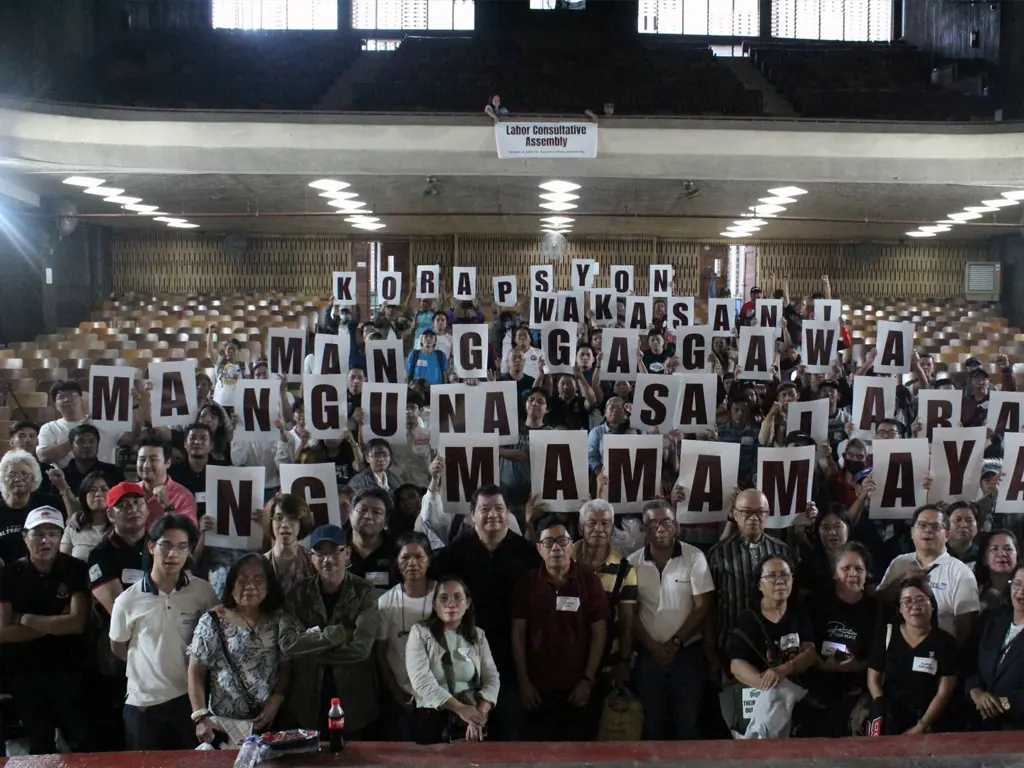
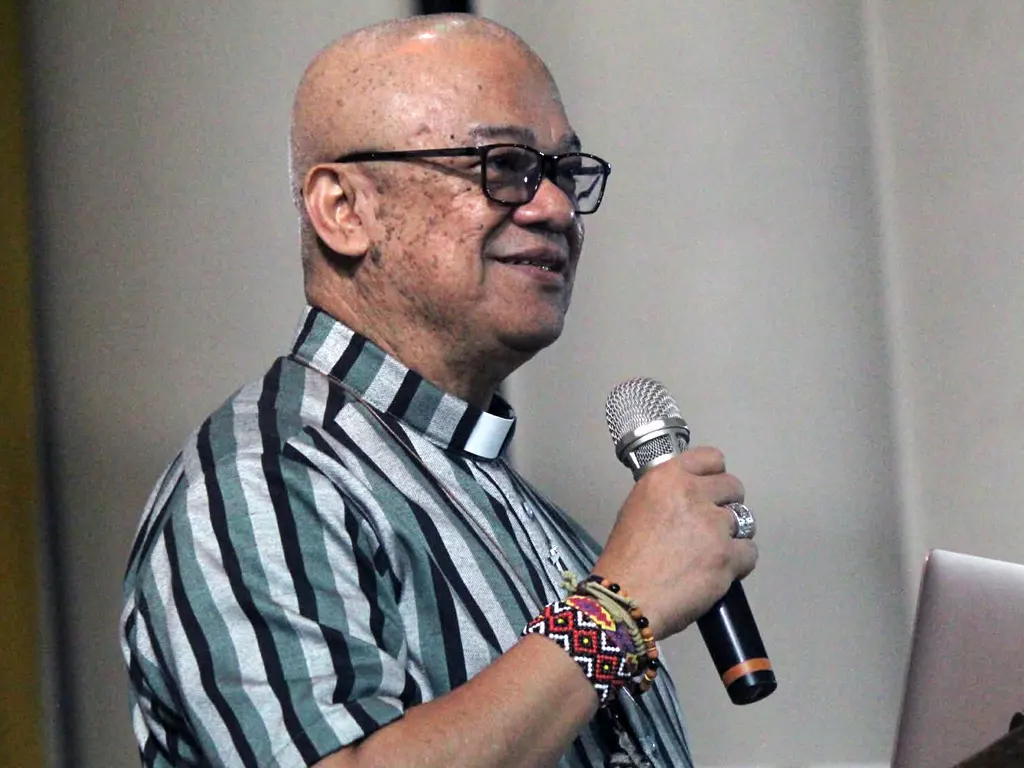
BISHOP Gerardo A. Alminaza urged Church leaders and labor organizations to place human dignity at the heart of work and economic life during the Labor Consultative Assembly held at St. Joseph College Auditorium in Quezon City.
Speaking before nearly 500 union leaders from both moderate and militant groups, Alminaza anchored the Church’s labor stance on the biblical phrase 𝑫𝒊𝒍𝒆𝒙𝒊 𝑻𝒆—Latin for “I have loved you” (Rev. 3:9).
He said the message is especially meant for workers who endure insecurity, exclusion, and exploitation, reminding them that their worth comes from God, not from the market.
The bishop stressed that labor is more than an economic concern; it is the daily space where human dignity is either upheld or violated.
To respond to these realities, he introduced the 𝙃𝙖𝙮𝙪𝙢𝙖 framework, a Visayan concept metaphorically describing a communal process of healing and restoring what is broken. Hayuma, he explained, calls for collective responsibility in addressing social, environmental, and community fractures caused by unjust systems.
Alminaza, President of Caritas Philippines, identified low wages, contractualization, unsafe workplaces, and forced migration as “deep social wounds” that demand organized and moral action.
Drawing from Catholic social teaching, he reiterated that workers are not commodities and that labor must take precedence over profit. He also affirmed trade unions as vital expressions of solidarity and challenged Church institutions to lead by example—ensuring just wages and decent working conditions within their own establishments.
The bishop linked Dilexi Te to the spirit of Pope Leo XIV’s 2025 Apostolic Exhortation of the same title, which emphasizes the Church’s preferential option for the poor and continuity with Pope Francis’ vision for the marginalized. He said the exhortation reinforces the Church’s duty to stand with workers as part of its witness of love and justice in the modern world.
metrosundaily