By Tracy Cabrera
CAMP GEN. BASILIO NAVARRO, Zamboanga City — Unfortunately for the administration of President Ferdinand ‘Bongbong’ Marcos Jr., geopolitical observers are now expressing apprehension over a significant resurgence of extremism in Mindanao as signaled by the recent ambush in Lanao del Norte where four government troopers were killed and one seriously injured.
In a statement issued by independent non-governmental organization Council for Climate and Conflict Action Asia (CCAA), the attack, which authorities have linked to the defunct Dawlah Islamiyah (DI), pointed to an escalating security threat in and around the Bangsamoro Autonomous Region in Muslim Mindanao (BARMM), despite years of counter-terrorism operations and peace-building efforts.
Officials of the Western Mindanao Command under acting commander Brigadier General Romulo Quemado II disclosed that the wounded trooper and slain soldiers were out on a humanitarian mission when they were waylaid in a remote area of Barangay Lininding in Munai, Lanao del Norte on Friday morning, January 23.
The Lanao del Norte Provincial Police Office identified those killed as Staff Sargeant Diosito Araya, Sgt. Gilbert Arnoza, Sgt. Junel Calgas and another initially identified only as Private Laniton. Wounded in the ambuscade was Corporal Rollen Dela Cruz who wad immediately transported by emergency responders to a hospital for treatment.
As a result of the incident, CCAA cited that data from its Critical Events Monitoring System showed a sharp increase in violent extremist incidents rising by 91 percent from 23 cases in 2024 to 44 in 2025.
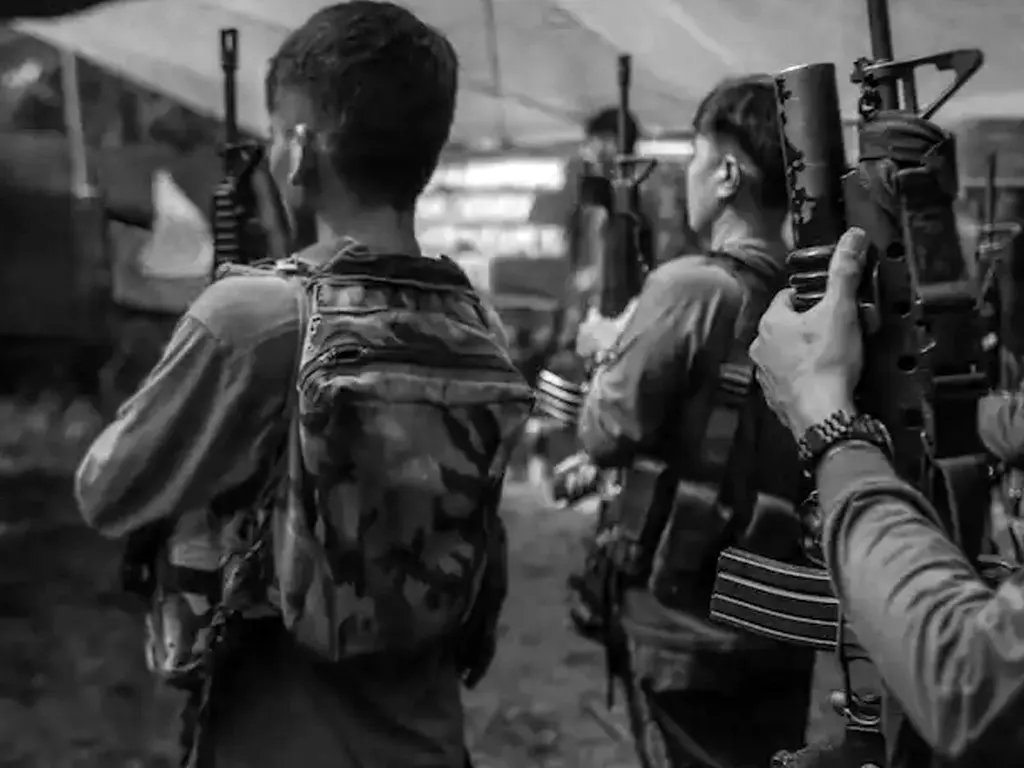
The said incidents included armed encounters between alleged DI members and state forces that resulted in at least 30 deaths, the arrest of suspected financiers and drug dealers connected to extremist networks and the recovery of high-powered firearms and explosives such as M16 rifles, machine guns, grenade launchers, and improvised explosive devices.
CCAA also reported that it has observed sustained recruitment activity over the past two years with indications that extremist groups were reestablishing their presence in parts of Lanao and Maguindanao and reappearing in areas previously declared free of Islamic State-linked groups.
Despite the apprehension, though, the group is cautioning against conclusions that could inflame religious or identity-based tensions. Still, the Munai ambush hinted that recruitment and training activities were continuing, group membership was expanding and operational capabilities had advanced to the point of mounting coordinated attacks against security forces.
The organization likewise noted that the timing of the resurgence raised additional concern, with BARMM parliamentary elections approaching and the 2028 national elections on the horizon.
“The renewed extremist violence could destabilize fragile communities and erode gains made since the signing and implementation of the Bangsamoro peace agreement. Addressing th(is) threat (will) require a broader ‘state and society’ response that move(s) beyond a purely security-driven approach,” it pointed out.
“(Moreover), it call(s) for closer cooperation between national and local government agencies and civil society organizations, alongside sustained investment in community-based prevention efforts,” it added.
Among the measures CCAA urged were stronger monitoring of conflict-prone areas, reintegration programs for former combatants and their families grounded in restorative justice, expanded social support for communities—particularly youth—and long-term initiatives that addressed poverty, exclusion, and other structural factors that make communities vulnerable to radicalization.
metrosundaily