
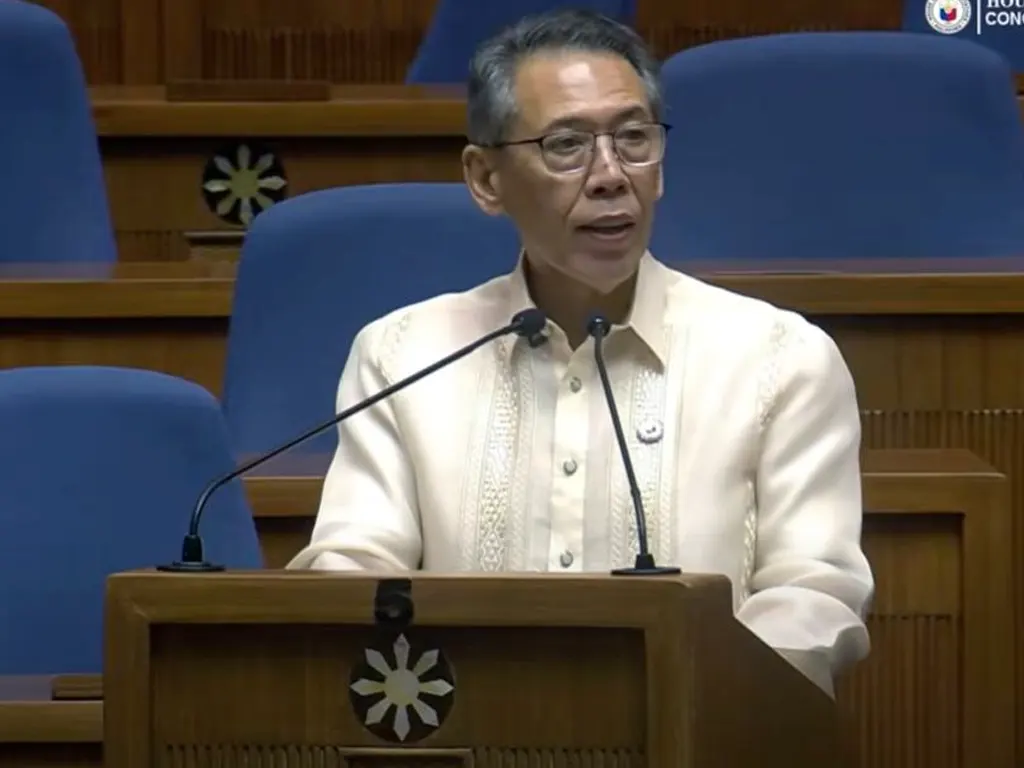
Courtesy: House of Representatives
HOW can we expect ordinary citizens to follow the law if it’s written in a language they can’t understand?
This is the question posed by Akbayan Partylist Rep. Chel Diokno, who recently filed the “Batas sa Sariling Wika” Act (House Bill No. 3863) — a measure requiring the translation of Philippine laws with penal provisions into Filipino, Bisaya, and Ilokano.
“A worker in Mindanao shouldn’t need a lawyer or translator to understand the Labor Code; a mother in Ilocos should be able to read the Anti-VAWC law in her native tongue. By translating laws with penalties into terms that are easily understandable by ordinary citizens in their local language, we minimize the risk of misunderstanding and misinterpretation,” Diokno explained.
The bill seeks to amend the Revised Administrative Code of 1987 to require translations into the three major Philippine languages — Filipino, Bisaya, and Ilokano — representing the country’s four largest ethnolinguistic groups: Tagalog (26%), Bisaya (14.3%), Ilokano (8%), and Cebuano (8%).
If enacted, the law will require all new laws with penal provisions to be translated within 90 days, and all existing laws with penal provisions — including the Revised Penal Code, Labor Code, RA 7610, Anti-VAWC Act, Safe Spaces Act, and the Magna Carta of Filipino Seafarers, among others — to be translated within five years.
The Komisyon sa Wikang Filipino (KWF) will serve as the lead translating authority, while the Presidential Communications Office (PCO) will be tasked with publishing the translations in the Official Gazette and making them available online.
Diokno emphasized that the proposal brings the Philippines in line with its Southeast Asian neighbors.
“In countries like Indonesia, Thailand, Vietnam, Cambodia, Laos, Myanmar, and Timor-Leste, laws are written and enforced in their own languages,” he said in his privilege speech on August 18.
The Batas sa Sariling Wika bill is co-authored by fellow Akbayan Representatives Percival Cendaña, Dadah Kiram Ismula, and Dinagat Islands Rep. Arlene ‘Kaka’ Bag-ao.
metrosundaily