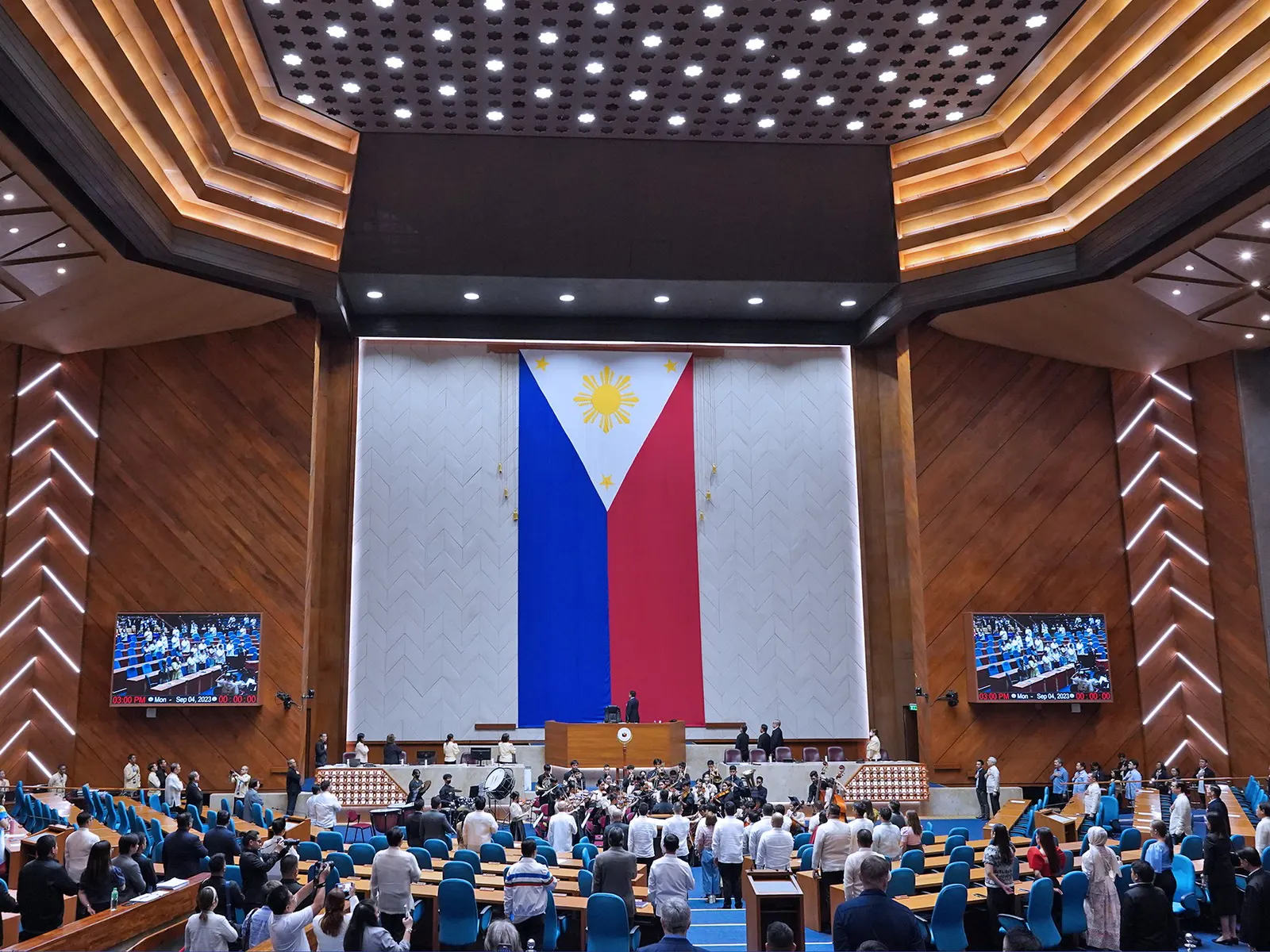
VOTING 234-0-0, the House of Representatives approved on third and final reading today the bill that lays down the proper handling of cadavers of Filipino Muslims, whose immediate burial the next day is necessary under Islamic rites.
House Bill (HB) No. 8925 (Philippine Islamic Burial Act) – authored by at least 10 Muslim-Filipino officials representing various legislative districts in Mindanao in the House of Representatives – was overwhelmingly approved by lawmakers in plenary.
“This measure seeks to further validate the free exercise of religion enshrined under our Constitution by allowing our Muslim brothers and sisters to bury their dead in accordance with their faith’s practice, and free from any prohibition and hindrance,” said House Speaker Martin G. Romualdez, the leader of the 311-member House of Representatives.
The authors of the bill are Reps. Manuel Jose “Mannix” M. Dalipe, Princess Rihan M. Sakaluran, Mohamad Khalid Q. Dimaporo, Wilter Y. Palma, Mujiv S. Hataman, Munir N. Arbison Jr., Bai Dimple I. Mastura, Sittie Aminah Q. Dimaporo, JC Abalos, Dimszar M. Sali, Yasser Alonto Balindog, Zia Alonto Adiong, and Mohamad P. Paglas.
“Nagpapasalamat tayo sa ating mga kasama dito sa Kongreso lalong lalo na kay Speaker Romualdez dahil mabilis na naaprubahan ang panukalang ito na kumikilala sa kahalagahan ng pagpapahayag ng pananampalataya ng mga Muslim, partikular sa paglilibing ng mga yumao. Sana ay maging batas ito at maiwasan na ang hindi pagre-release sa deceased ng mga ospital dahil lamang di makabayad ng obligasyon o kung anu pa mang dahilan,” Hataman, one of the principal authors of the measure, said.
The measure provides that the government respects the right of Filipino Muslims to bury their dead in accordance with their religious customs and beliefs, particularly, burying their dead before the next call to prayer.
“For burial purposes, in accordance with Islamic rites, Muslim cadavers shall be released within 24 hours by the hospital, medical clinic, funeral parlor, morgue, custodial and prison facilities, or other similar facilities, persons who are in actual care, custody of the cadaver,” a portion of the bill read.
“Non-payment of hospital bills, medical expenses, professional fees, cost of wrapping and shipment, or any other charges shall in no case be made as a reason for the withholding of the release and shipment of the cadaver,” it warned.
But the measure nevertheless allows the Muslim-Filipino family or the concerned party to “execute a promissory note for the unpaid obligation, or any other existing payment scheme acceptable to the other party.”
The burial of Muslim cadavers shall be performed right away, “with or without a certificate of death,” provided the death shall be reported by the person who performed the burial rites or by the next of kin of the deceased within 30 days after the date of burial to the local health officer.
It is the Health Officer’s job to prepare the death certificate and certify the cause of death.
“In the absence of the authorized health officer or a duly authorized representative, the death shall be reported to the Office of the Mayor, who shall prepare the death certificate and certify the cause of death if there is no forensic interest in the remains,” the bill stated.
But should there be “forensic interest,” or requests for autopsy, the “family of the deceased must first be informed prior to any examination that may be conducted by law enforcement authorities assigned in the case.”
metrosundaily