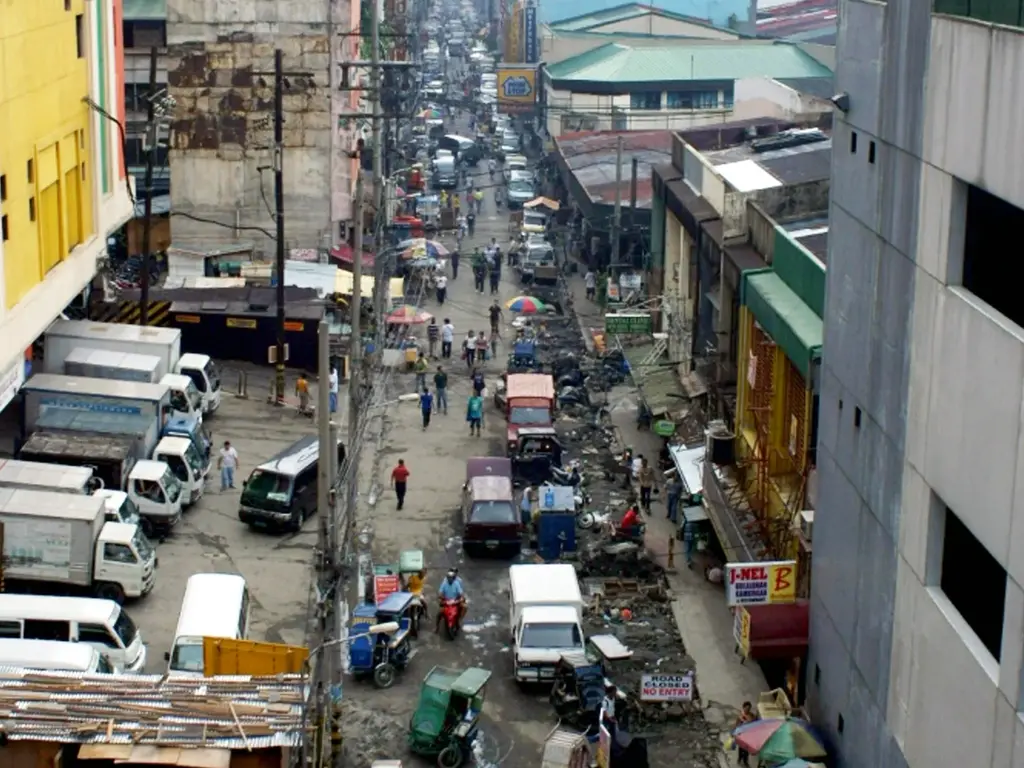
BARANGAY chairpersons of the Quiapo district have asked Congress to include informal settlers in how parts of Quiapo will become heritage zone.
The barangay officials said during the hearing of the technical working group on the Quiapo Heritage Zone bill that they support the measure but stressed that the welfare of informal settlers must be part of the development plans.
Manila Congressman Joel Chua noted that about 200 families of informal settlers reside in the old Paterno House and Bahay Nakpil. Prof. Manuel Zialcita said the Department of Housing and Urban Development should be included among the implementors of the Quiapo Heritage Zone bill. Congressman Chua said the inputs of the stakeholders will be factored into a substitute bill to be presented soon for committee approval.
SALIENT FEATURES
In House Bill 3750, Chua proposed the Quiapo National Heritage Zone to be bounded on the west by Evangelista Street, wrapping around the properties surrounding Quiapo Church and Plaza Miranda; on the north by rear property lines of buildings facing Escaldo Street and F. R. Hidalgo Street, continuing northwest along the rear property lines of buildings facing San Sebastian Street and northeast along Recto Avenue.”
The zone’s “east bounded by the side property lines of the San Sebastian College complex and Plaza del Carmen, and on the south, following the south bank of the Estero de Quiapo and wrapping around the rear property lines of buildings facing Hidalgo Street and A. Bautista Street.”
“The Quiapo Heritage Zone shall be accorded priority development by the Department of Tourism (DOT) and other concerned departments and units and shall be subject to the rules and regulations governing the development of national heritage zones,” Chua further wrote in the bill.
DEVELOPMENT PLAN
HB 3750 tasks the Department of Tourism, in partnership with the Tourism Infrastructure and Enterprise Zone Authority (TIEZA), Department of Public Works and Highways (DPWH), other government agencies concerned, and the City Government of Manila, to prepare the development plan within one year after the bill is approved.
The plan involves “the restoration, rehabilitation conservation and/or maintenance of such appropriate facilities which shall enhance the area…ensure the preservation of the cultural heritage and the historical significance of the identified area.”
For the necessary construction and/or improvement of roads and other infrastructure, the bill gives the mandate to the DOT, together with the Tourism Infrastructure and Enterprise Zone Authority (TIEZA), Department of Public Works and Highways (DPWH), in coordination with the City Government of Manila. Funding shall be included in the annual General Appropriations Act and/or charged against the internally generated funds of the DOT.
metrosundaily